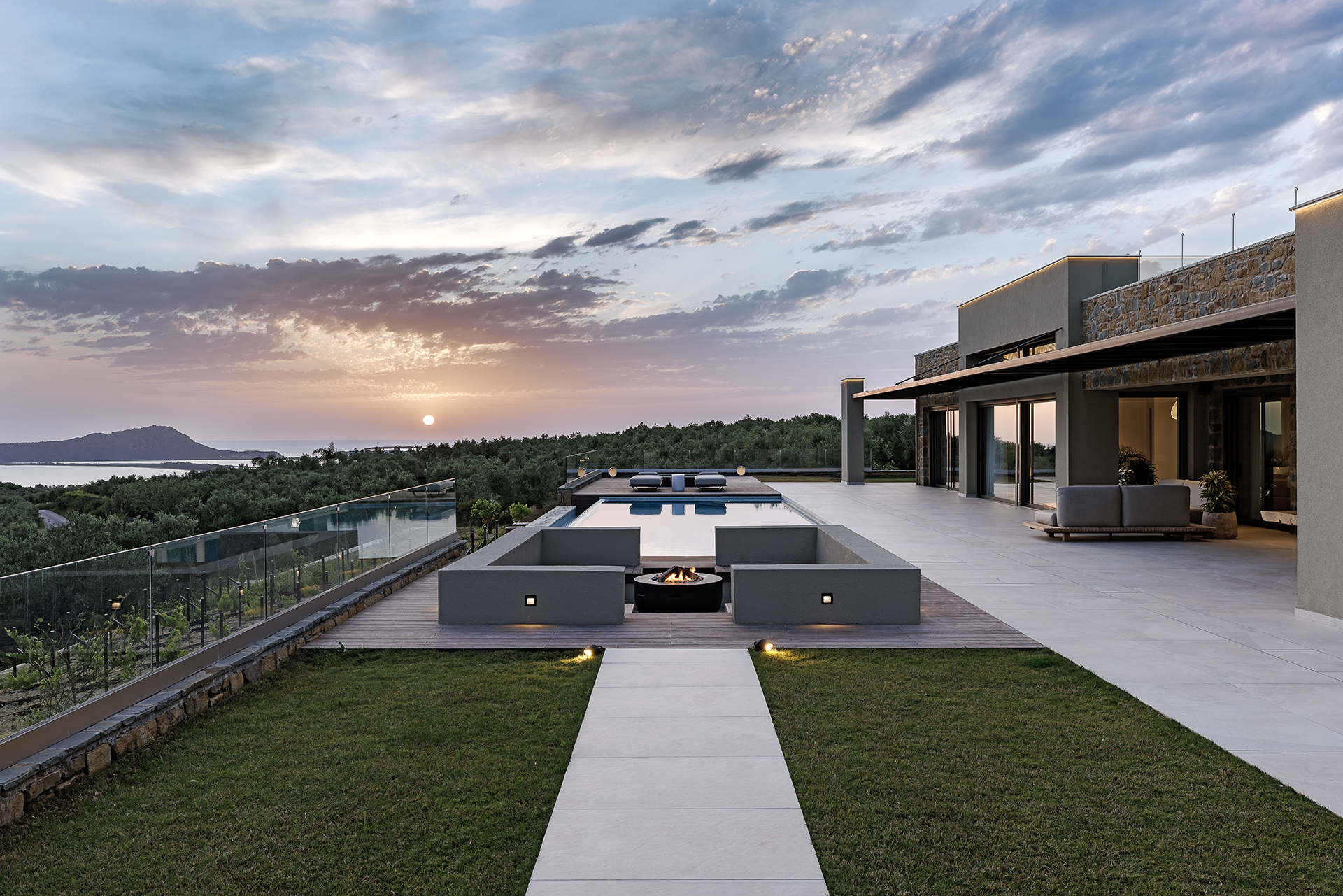
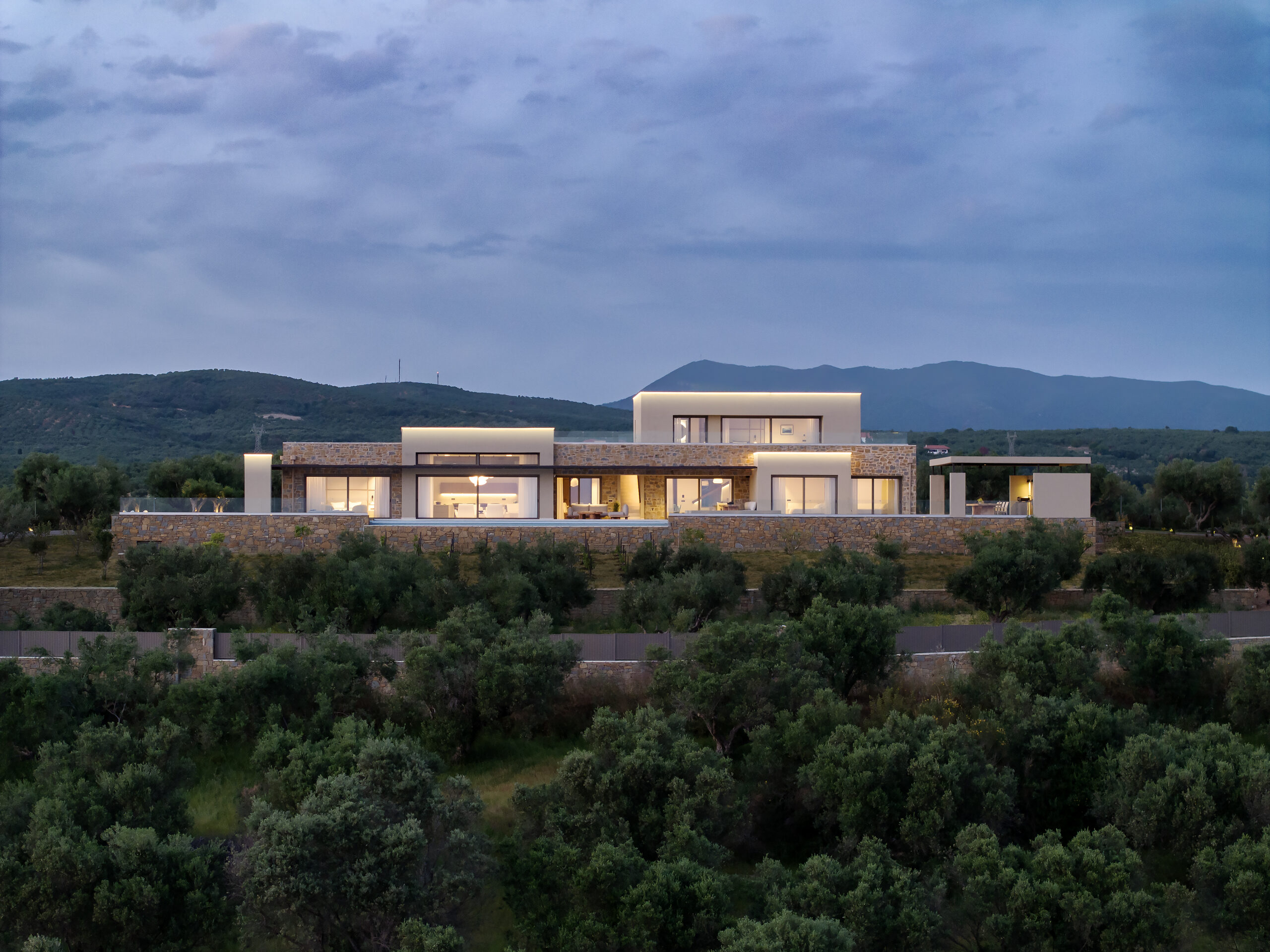
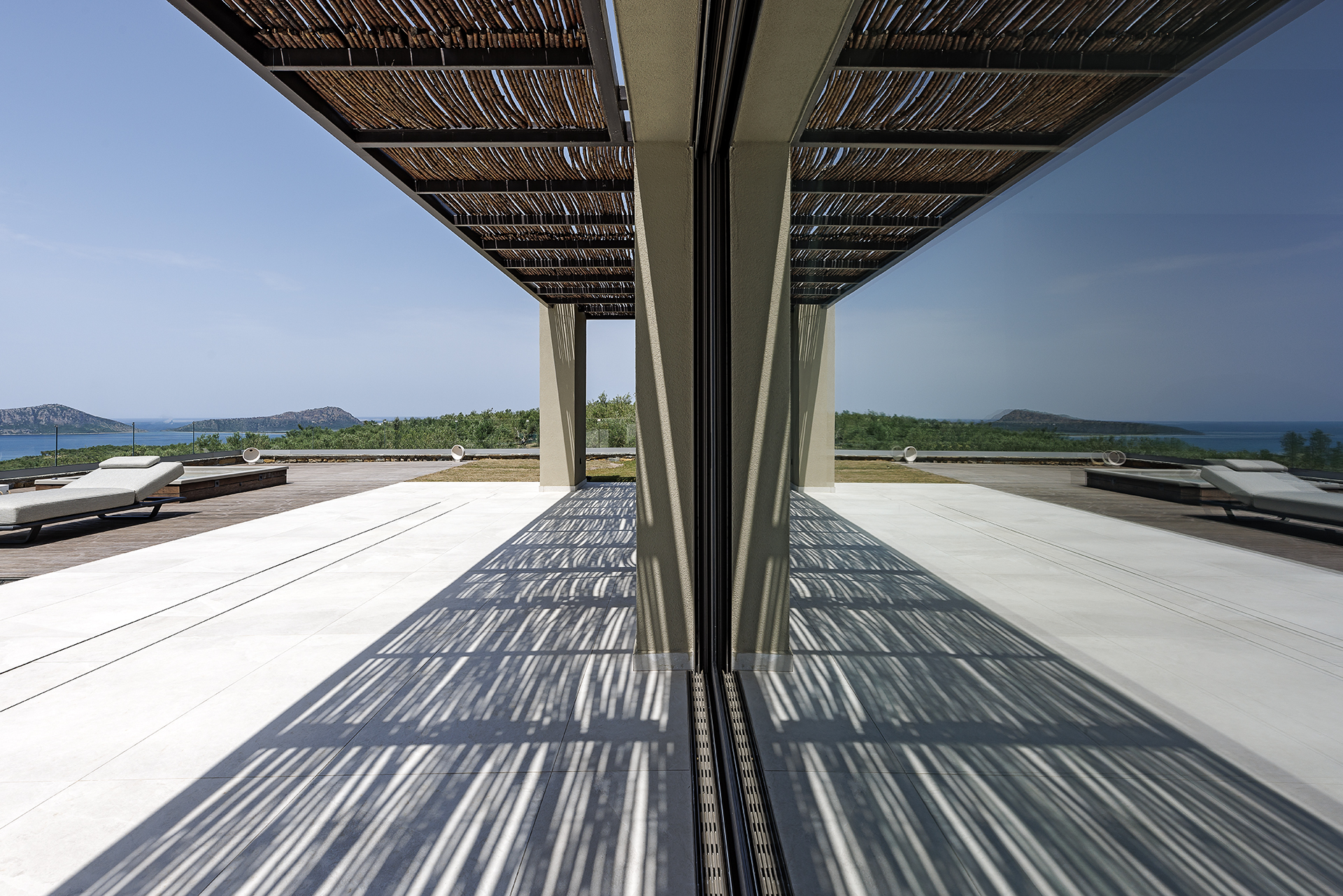
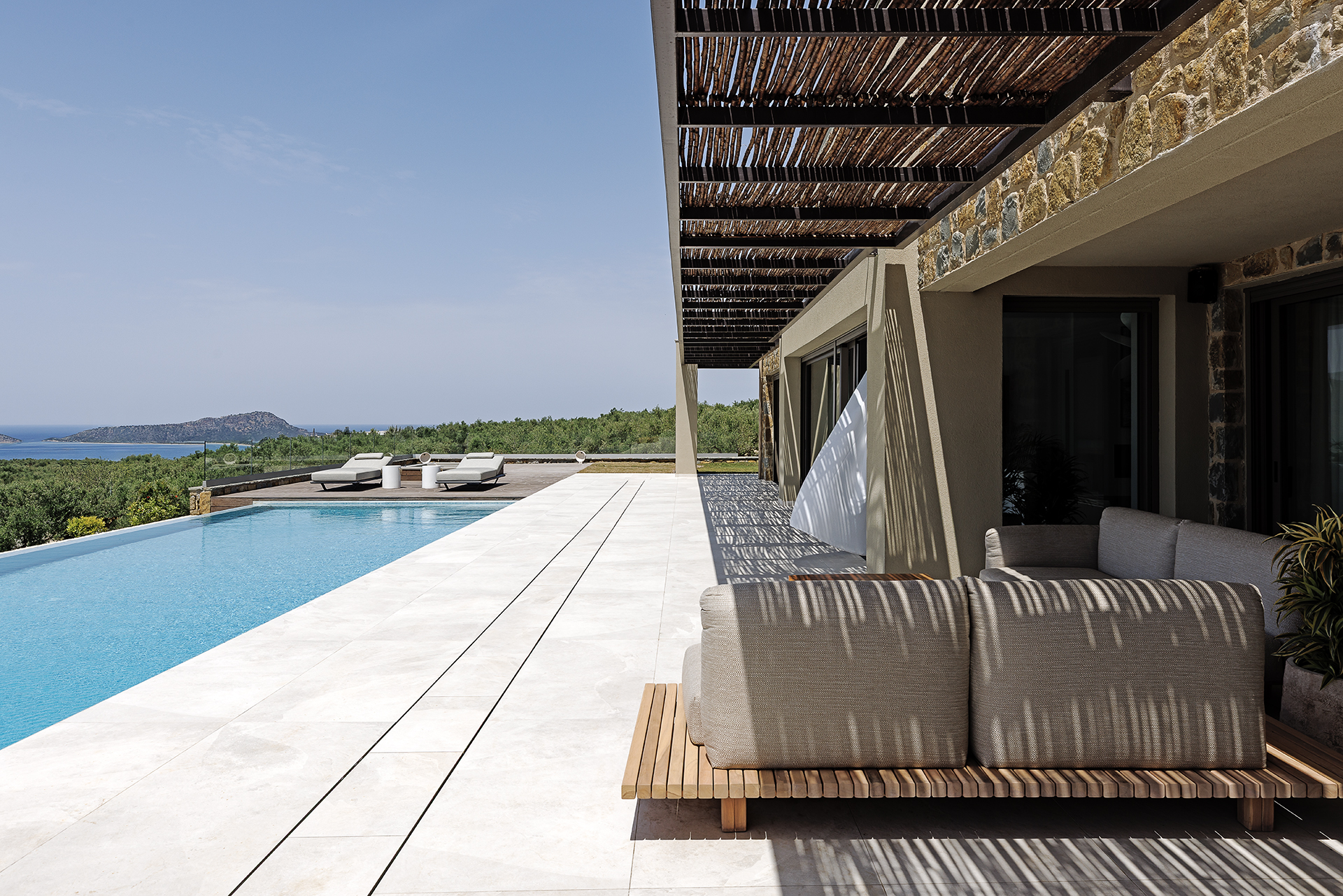
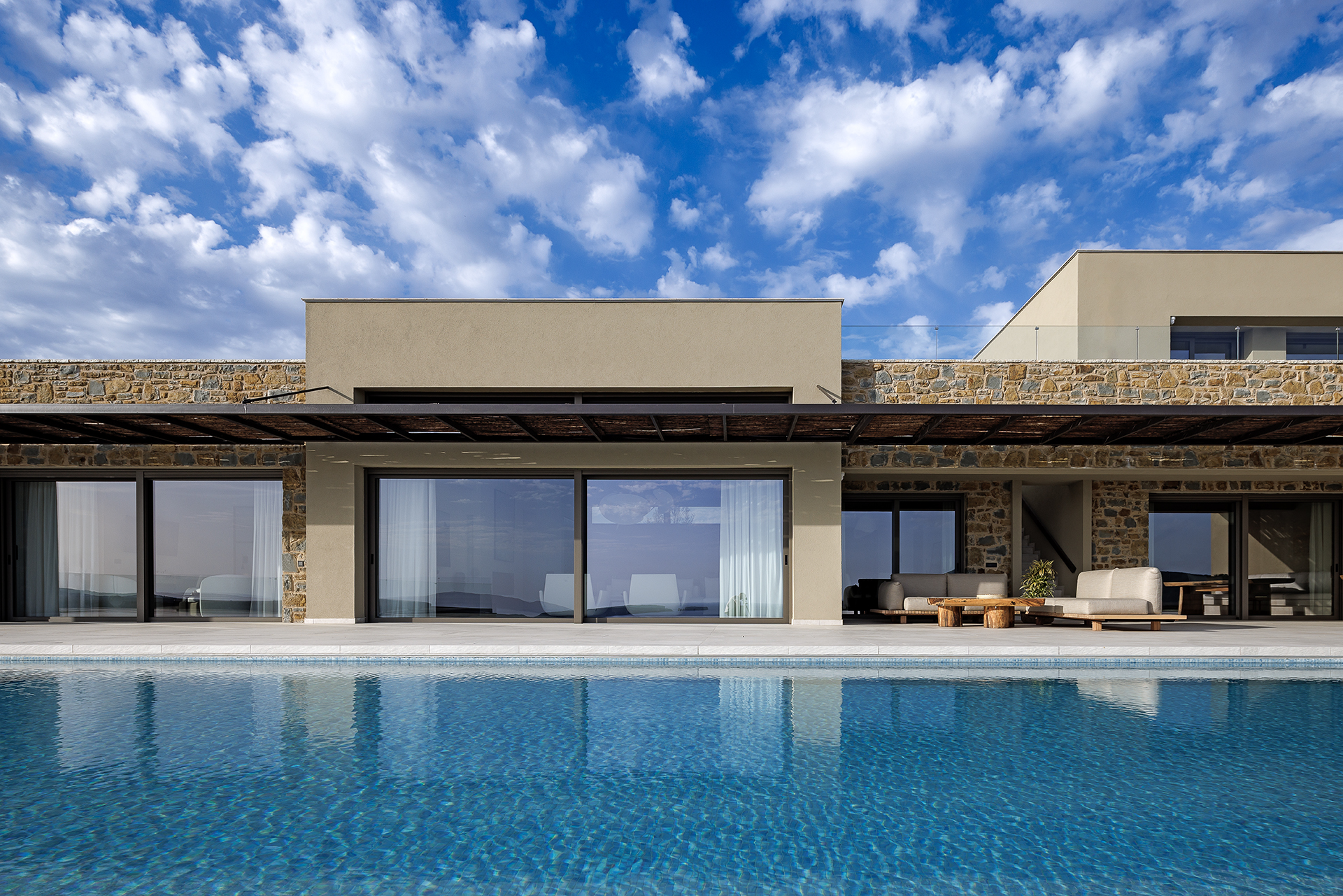
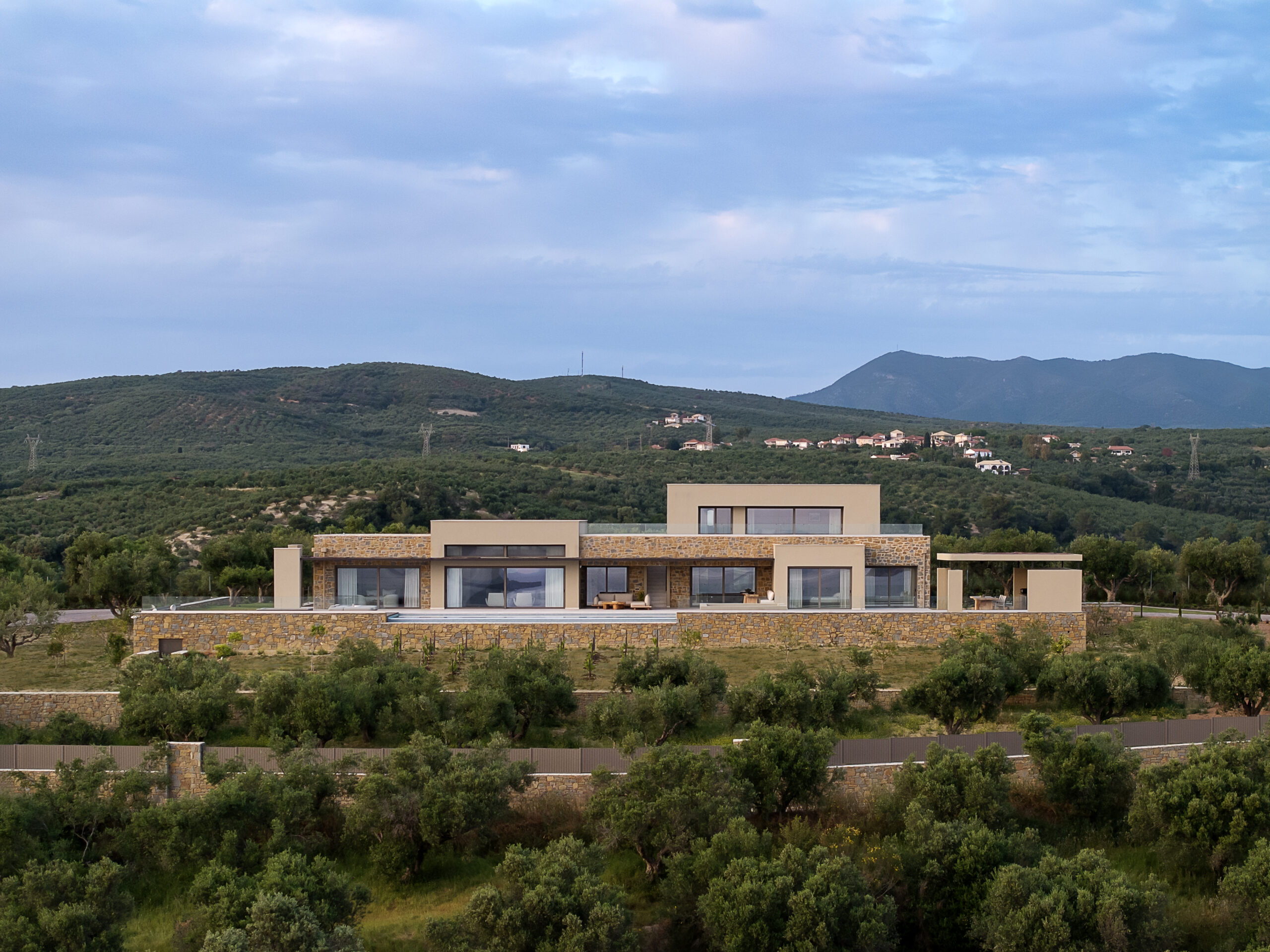
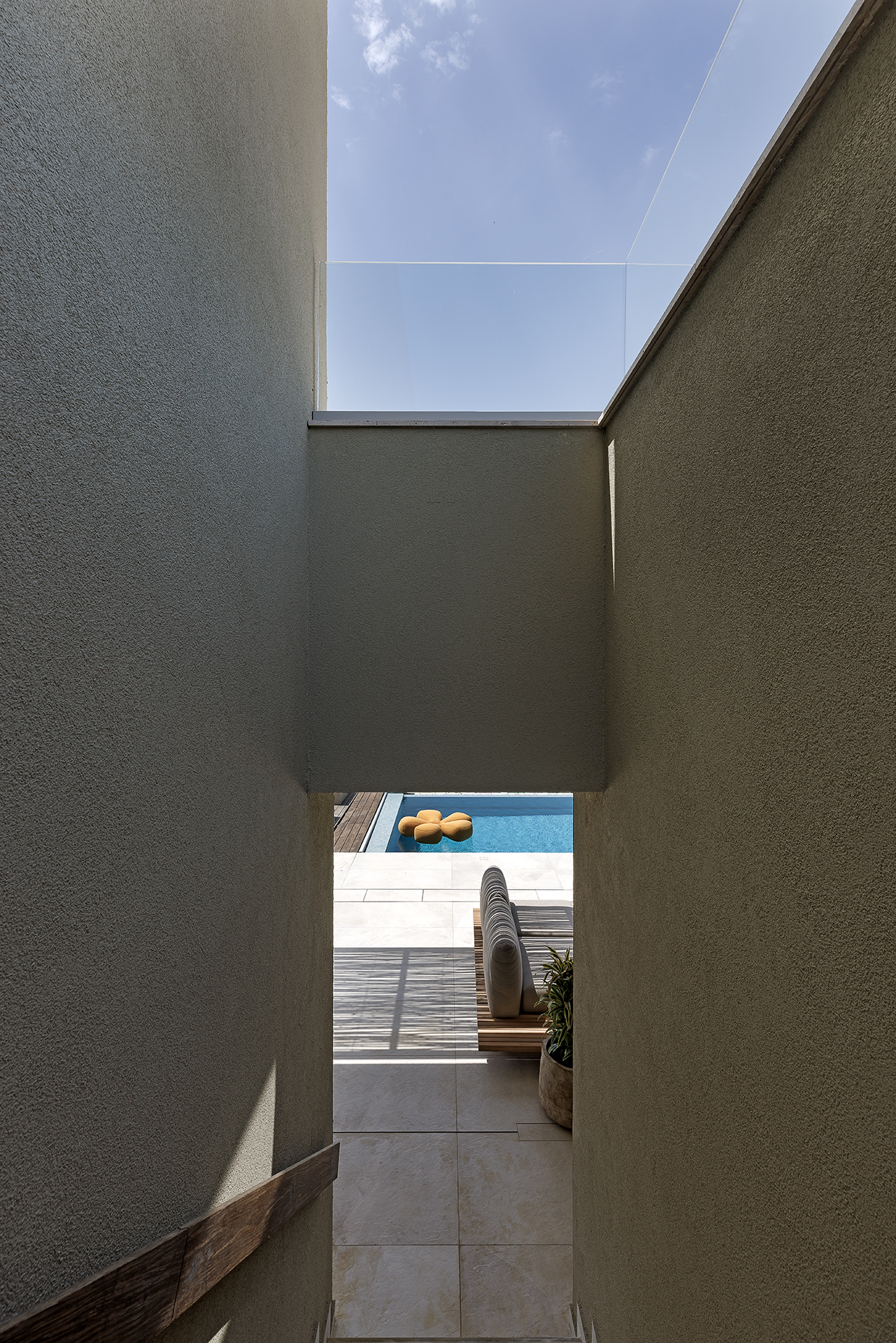
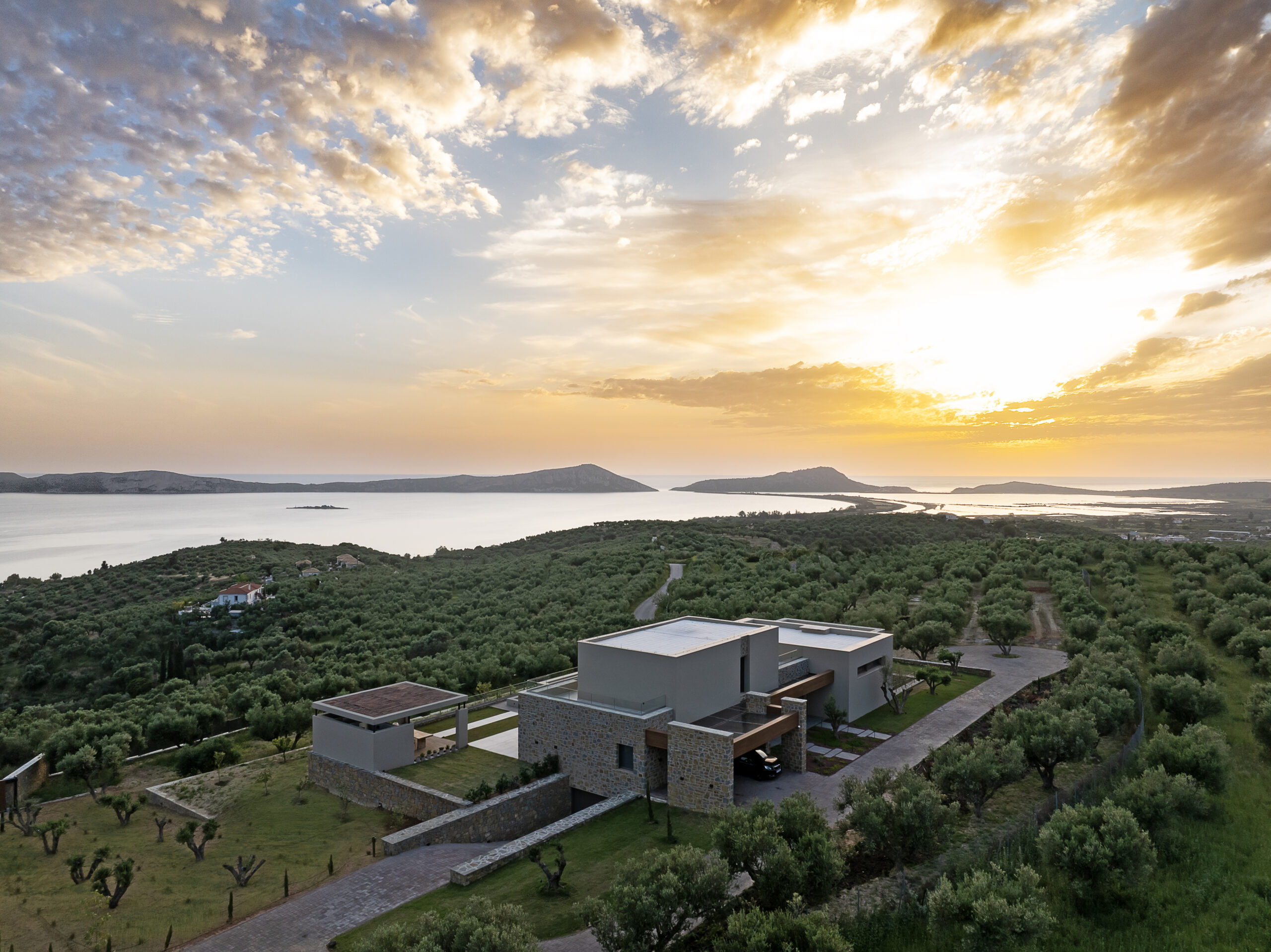
The central concept of the Liya residence is based on the idea of composition. Its morphological structure reflects the meeting of independent geometric entities, each with its own character, orientation, and “body.” These volumes feature different materials, scales, and postures within the space, yet they are connected with clarity and balance. They coexist like personalities engaged in a living dialogue: with distinct identities but shared codes.
This composition does not pursue uniformity; it seeks the acceptance of difference as an organic element of the whole. The volumes are arranged in such a way as to create relationships of proximity, distinction, and at times protection—like people inhabiting the same space in a way that strengthens their cohesion.
The decision to break down the form in this way reflects the desire for the residence to function as a field of coexistence. Just as every form of family, whether broad or chosen, consists of individuals with diverse paths and experiences, Liya is composed of architectural units that maintain their autonomy while simultaneously belonging to something larger.
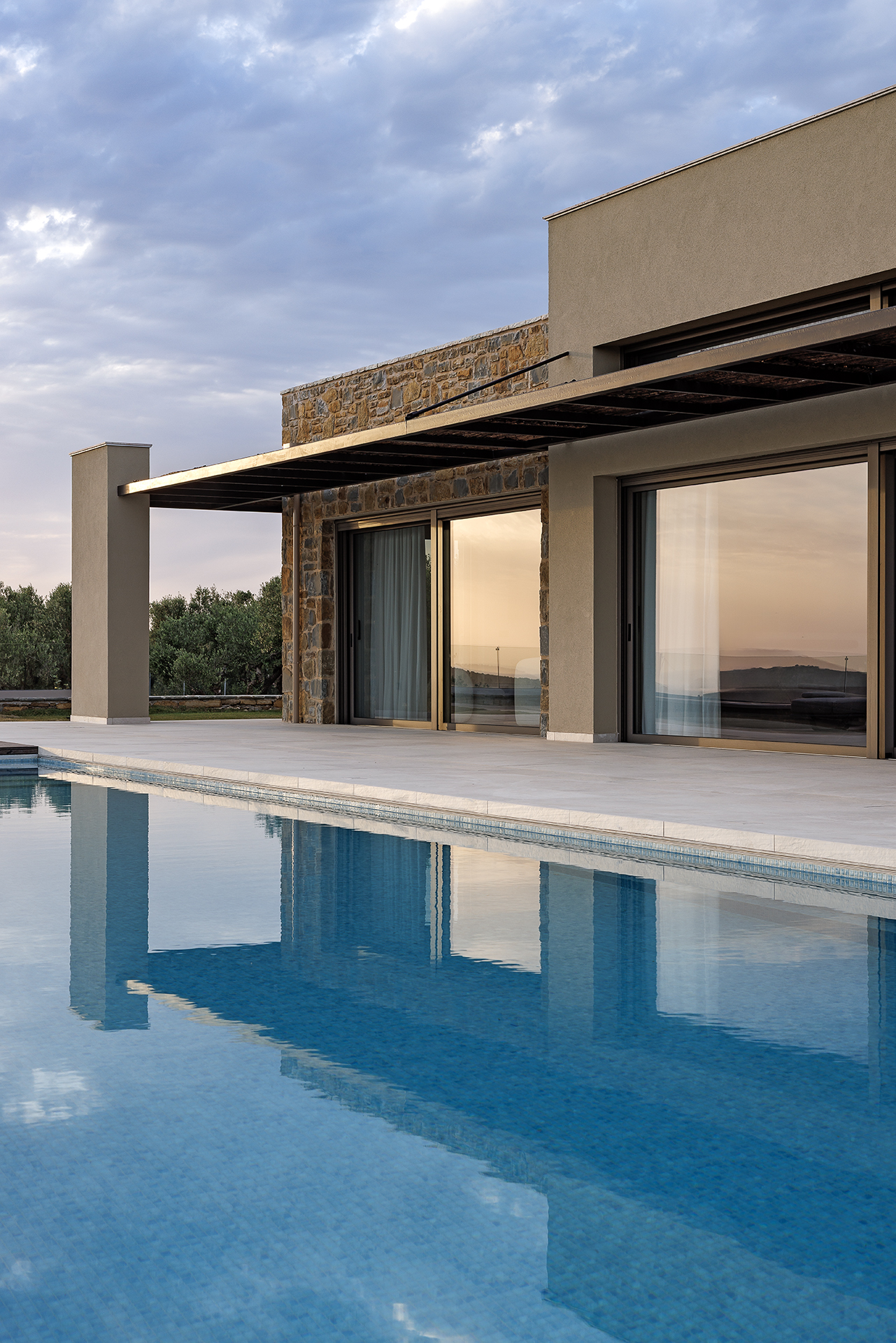
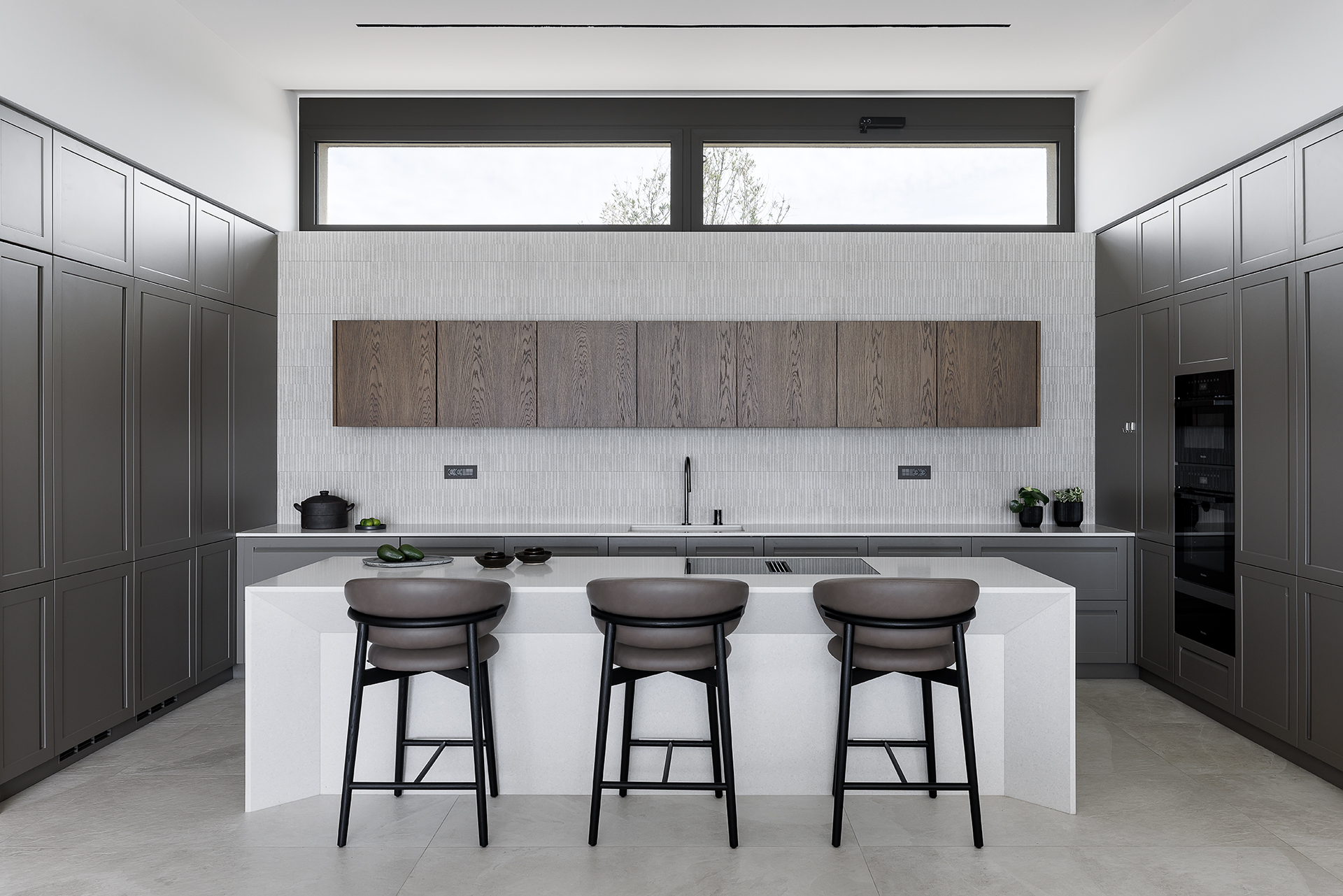
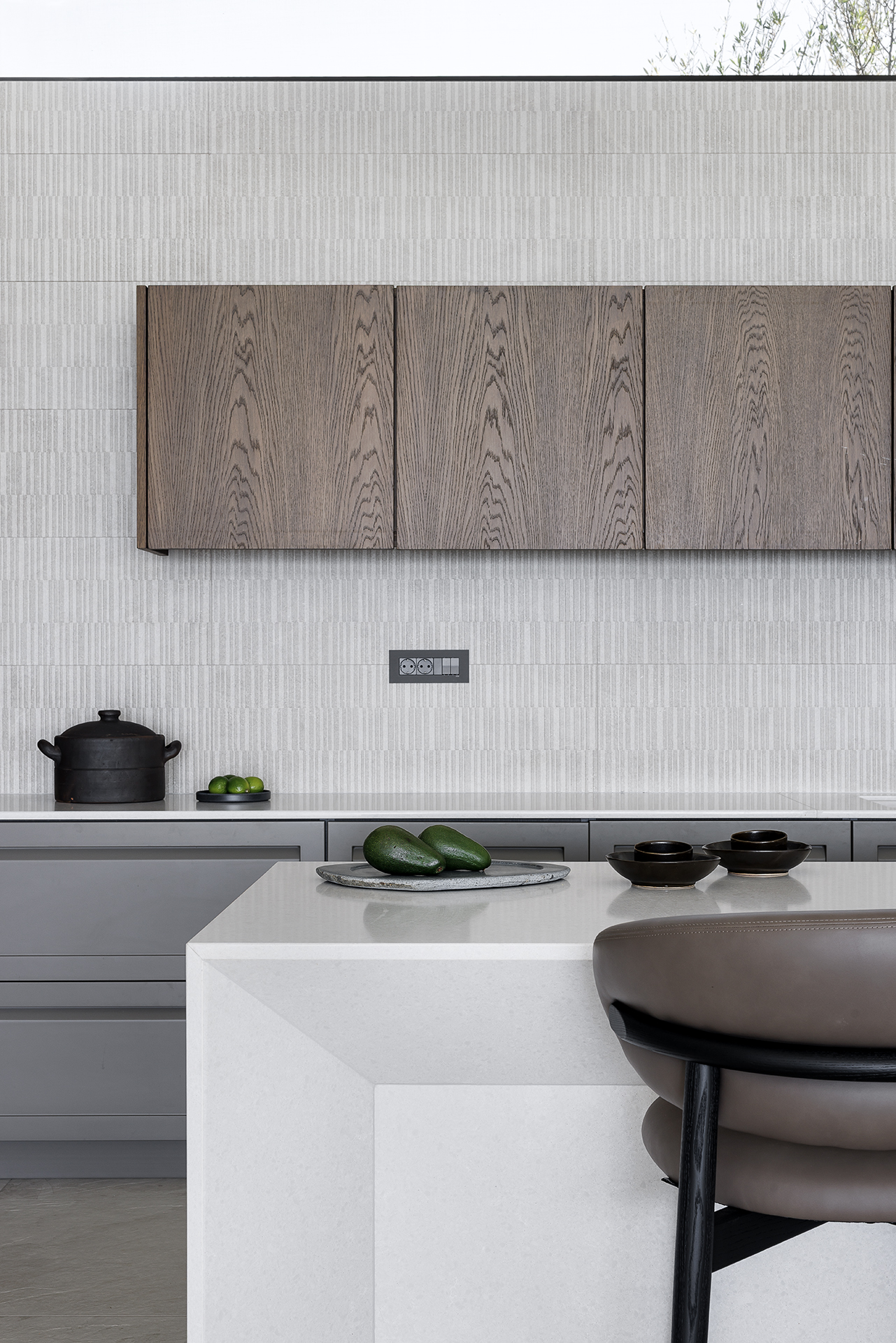
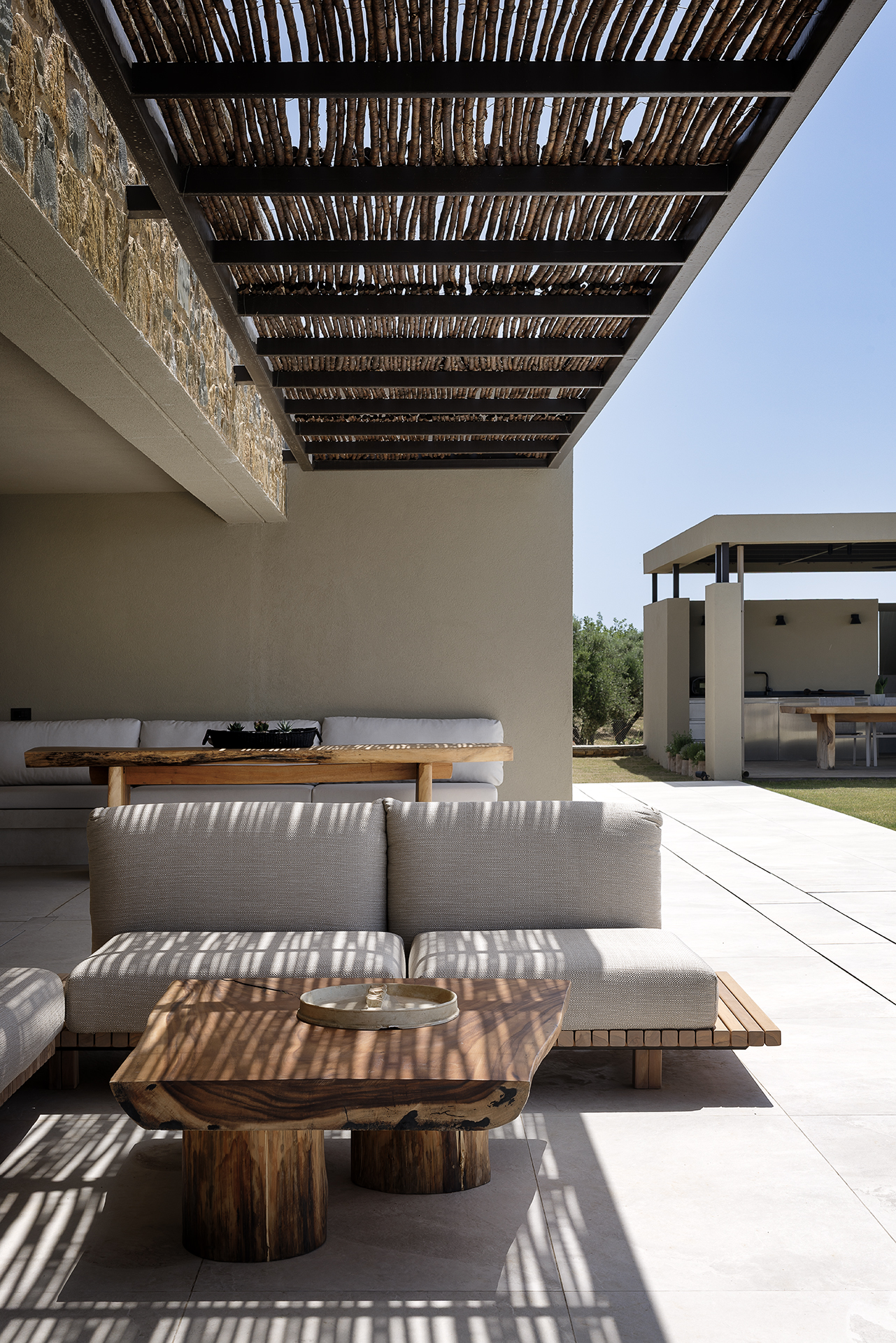
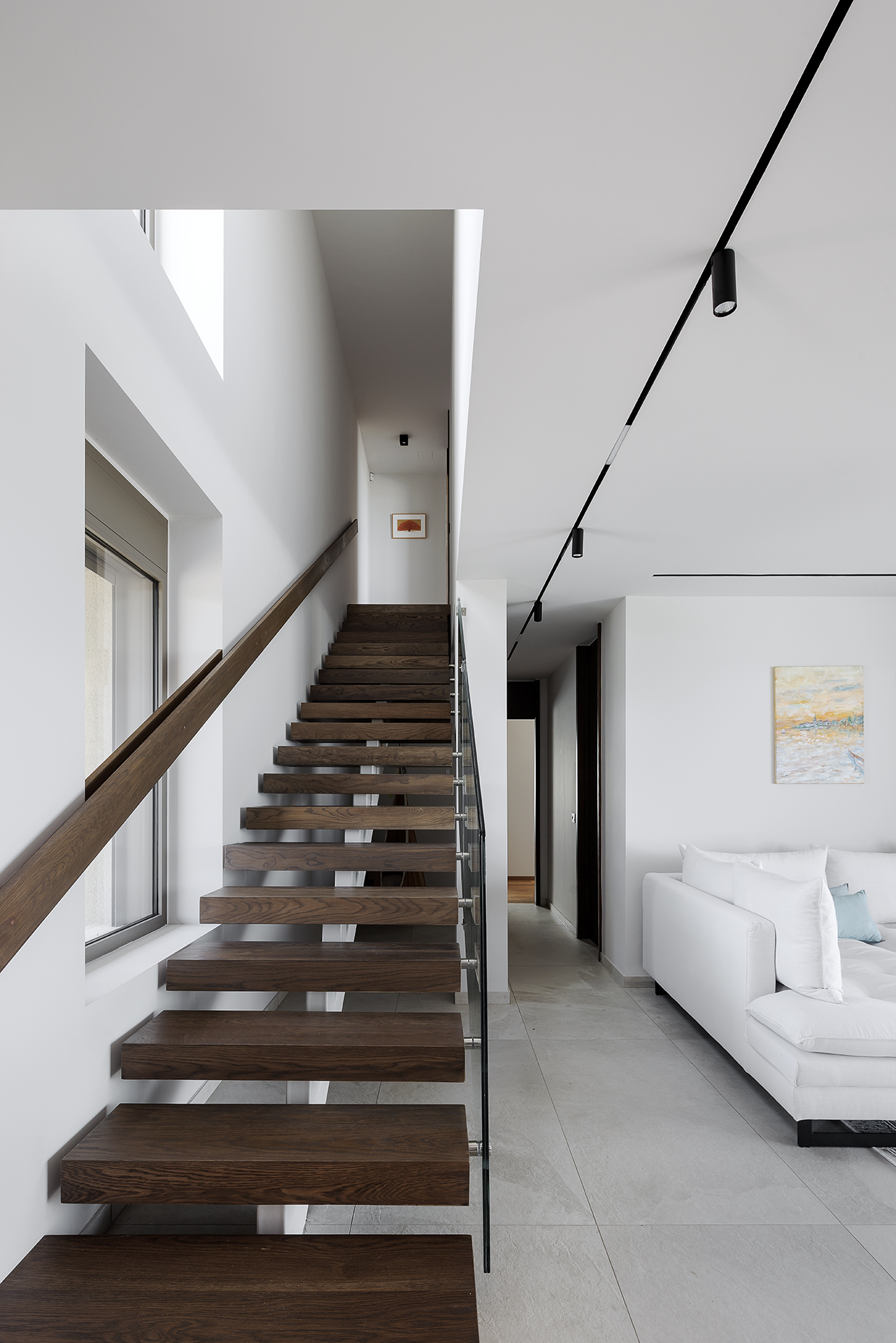
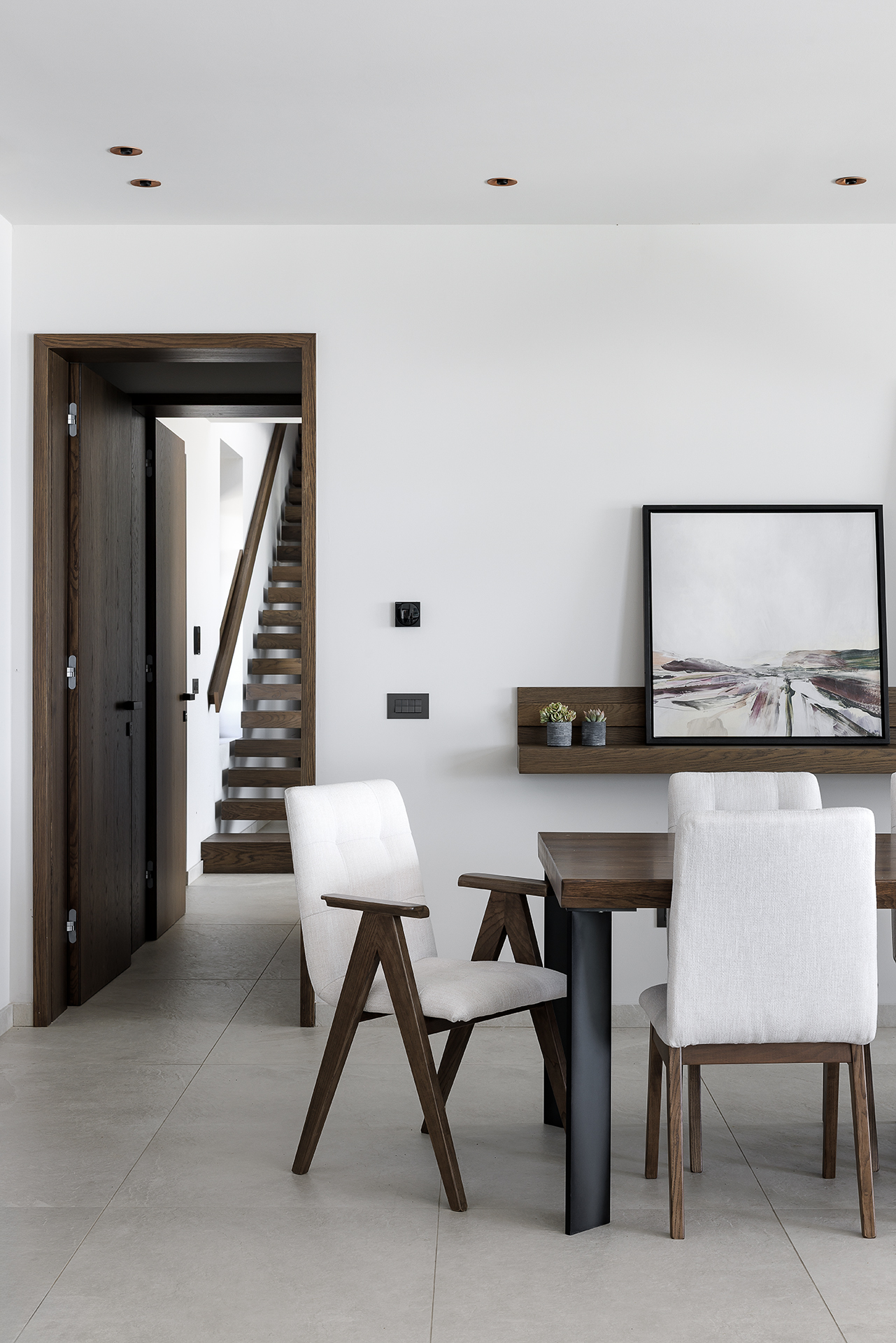
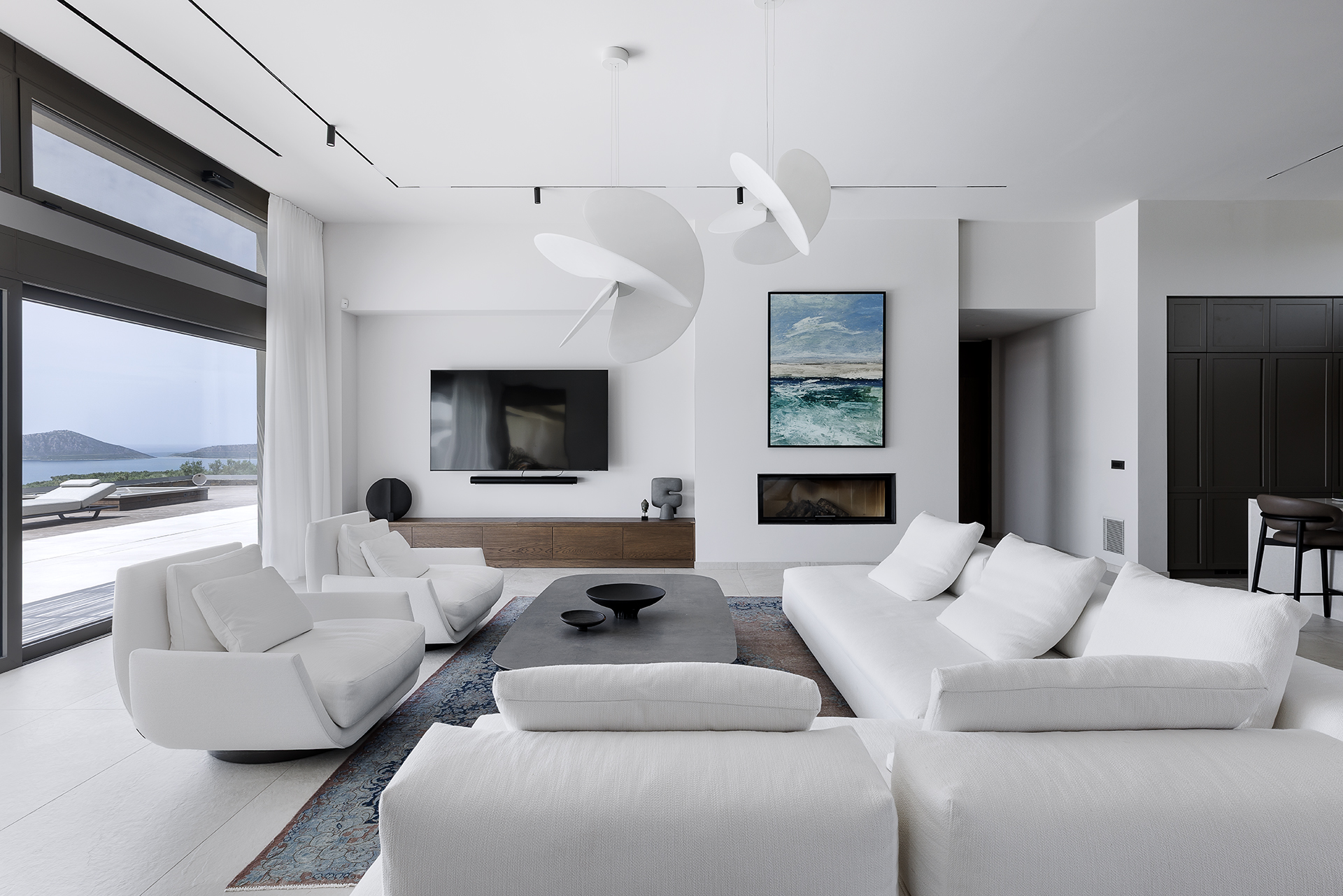
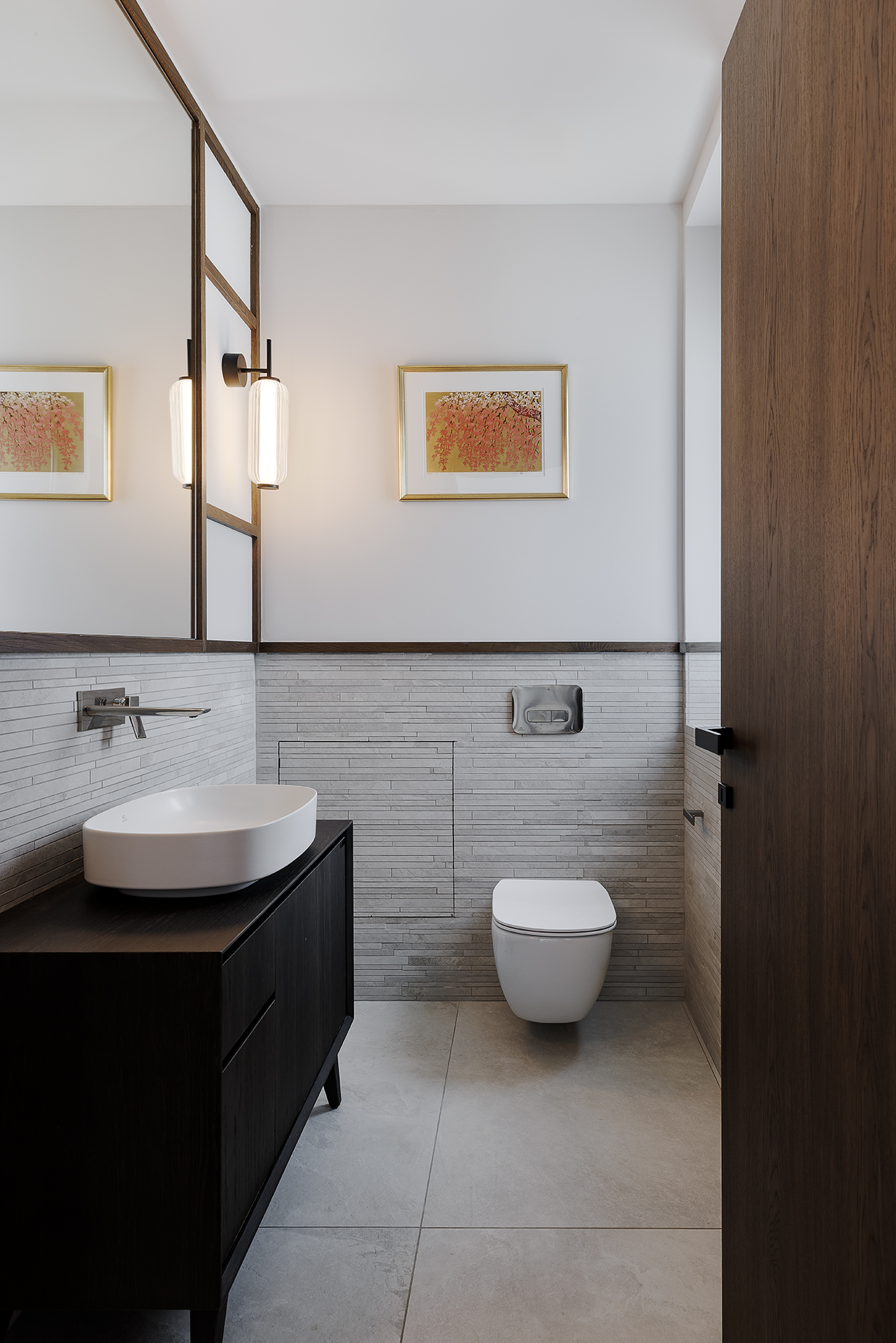
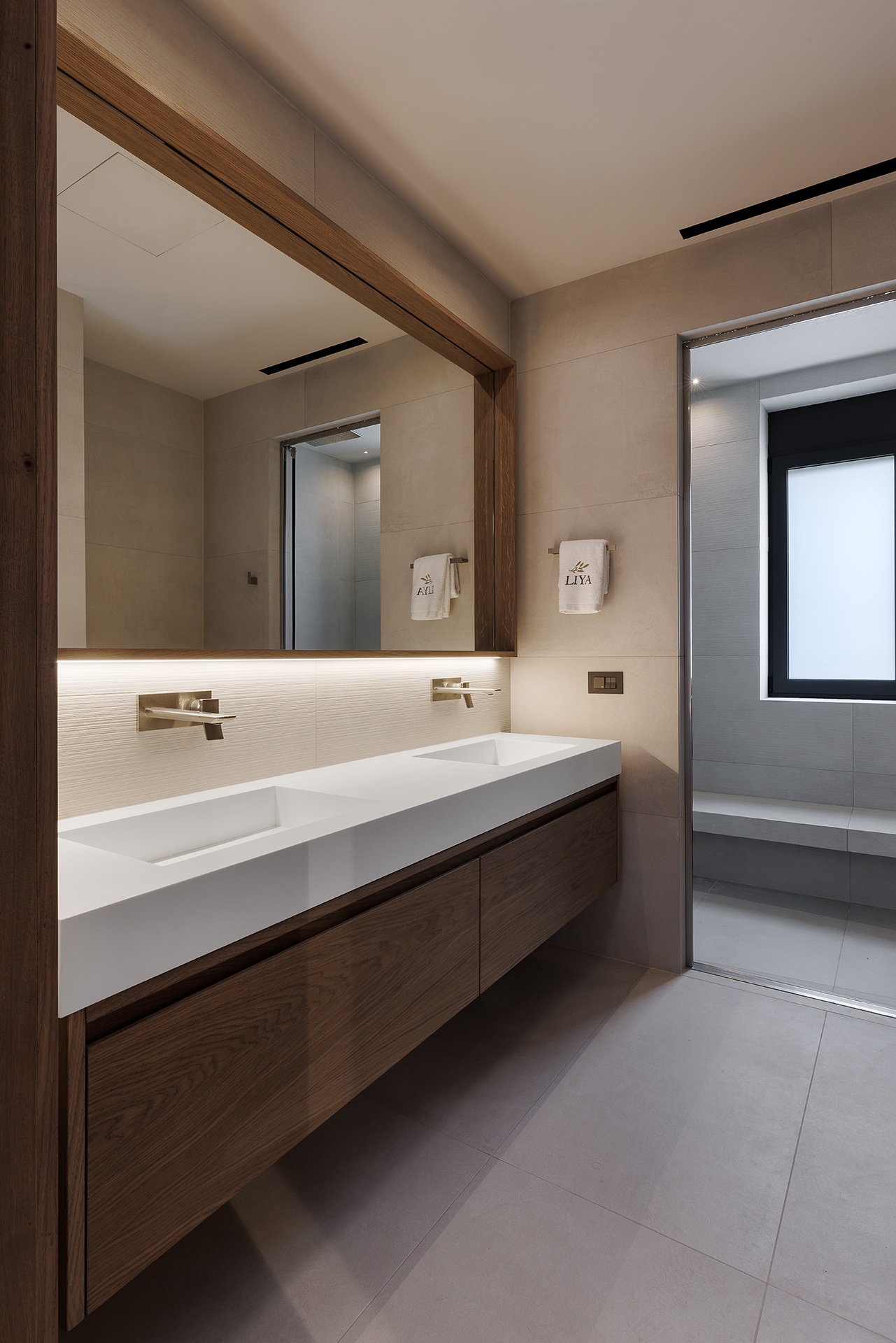
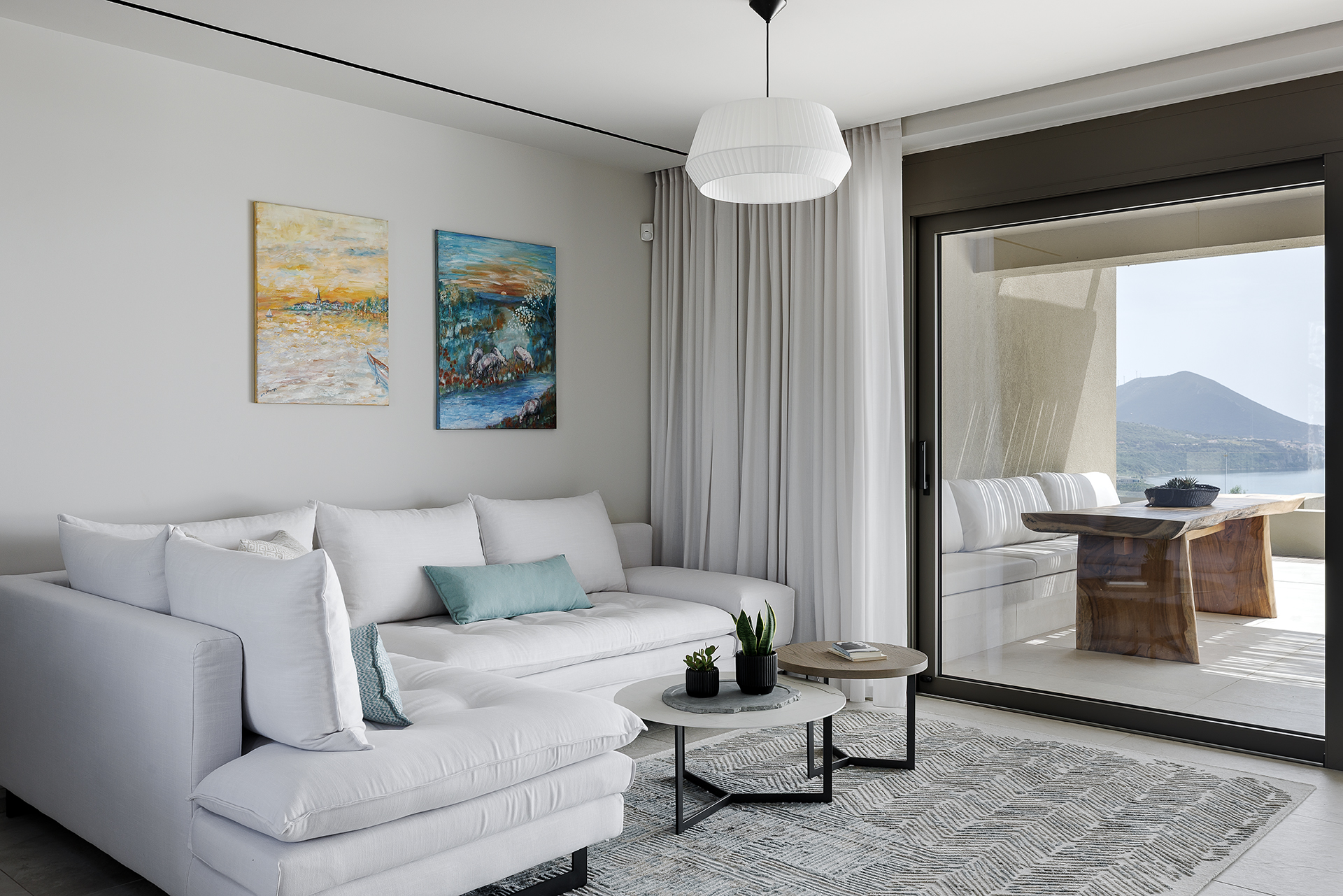
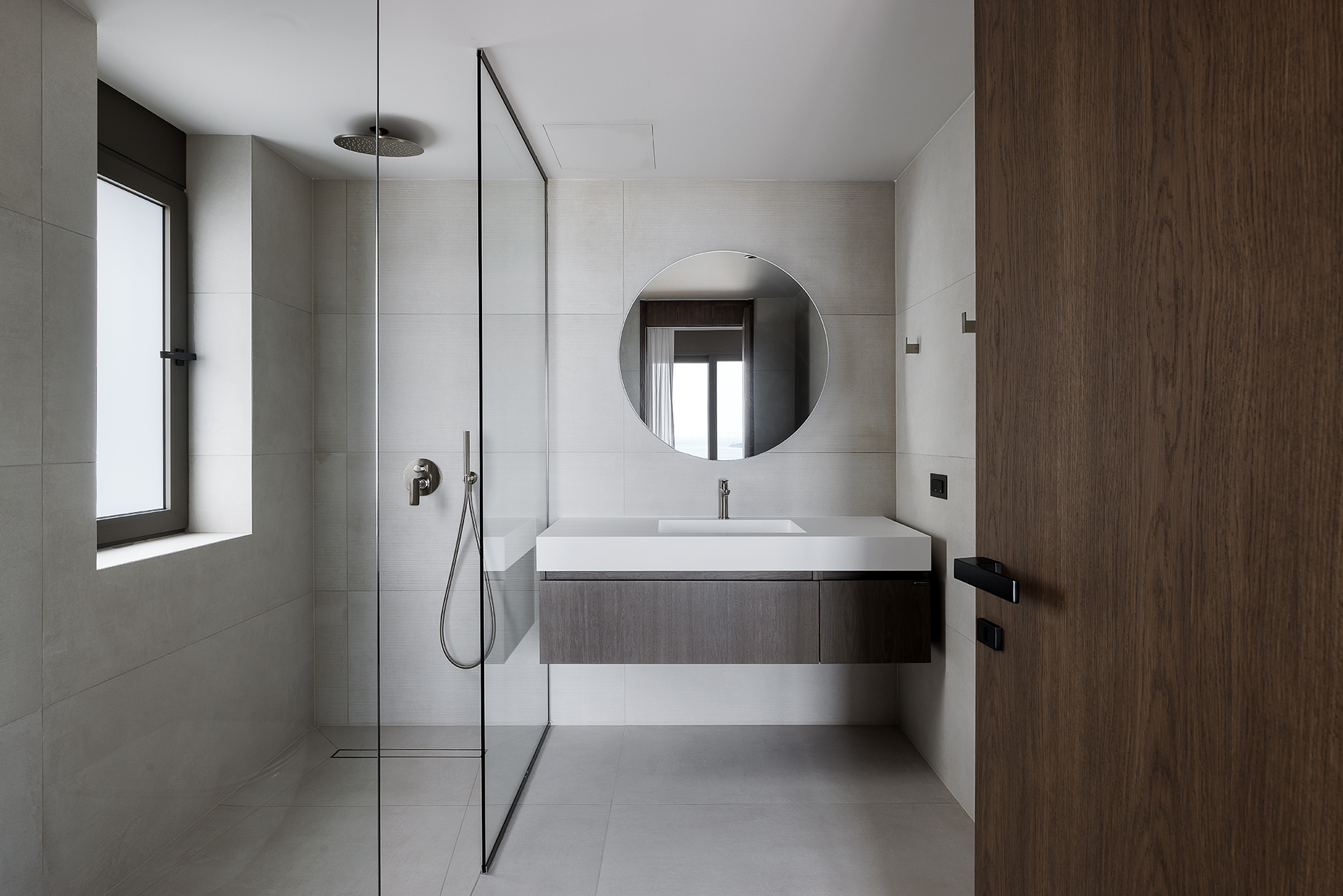
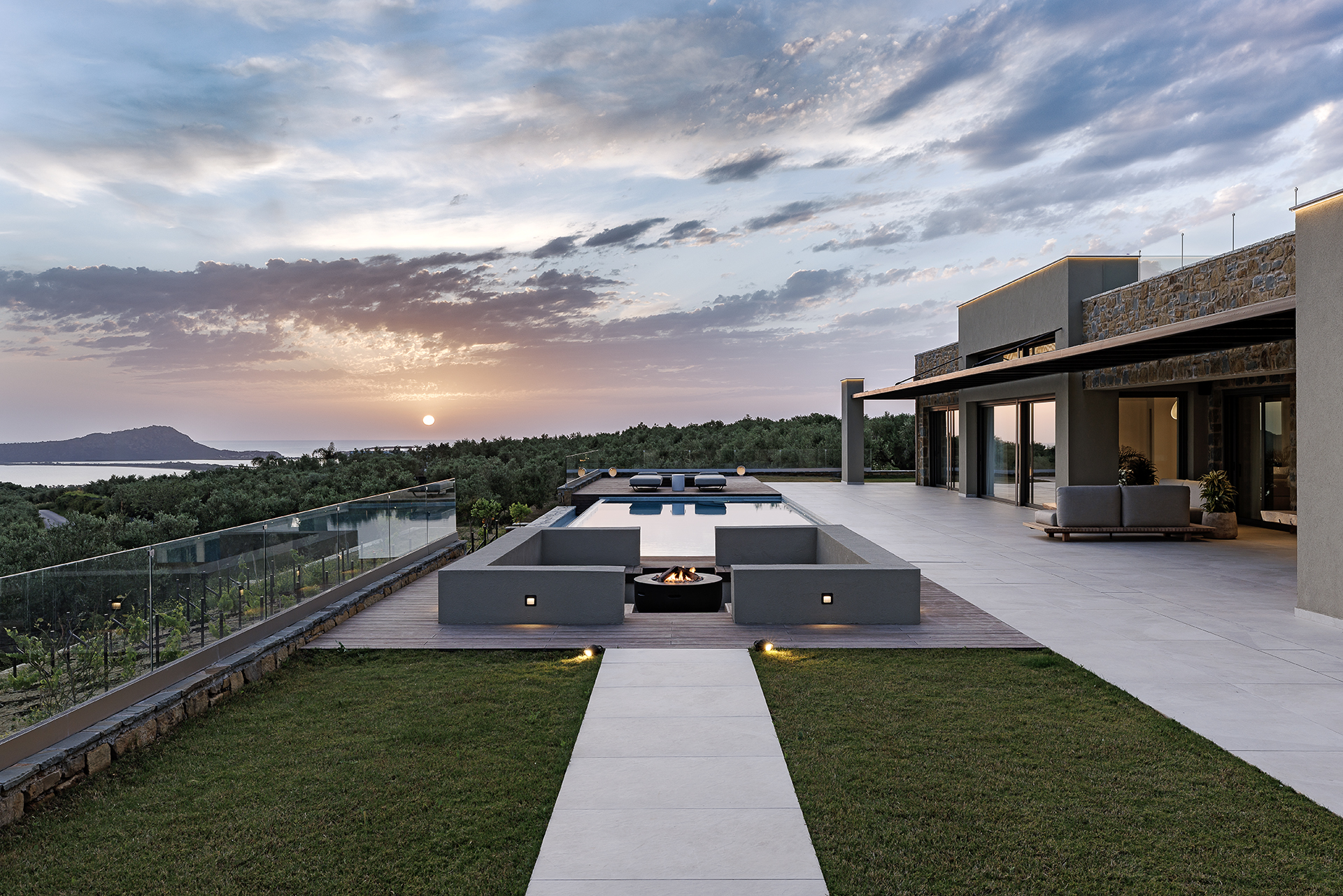
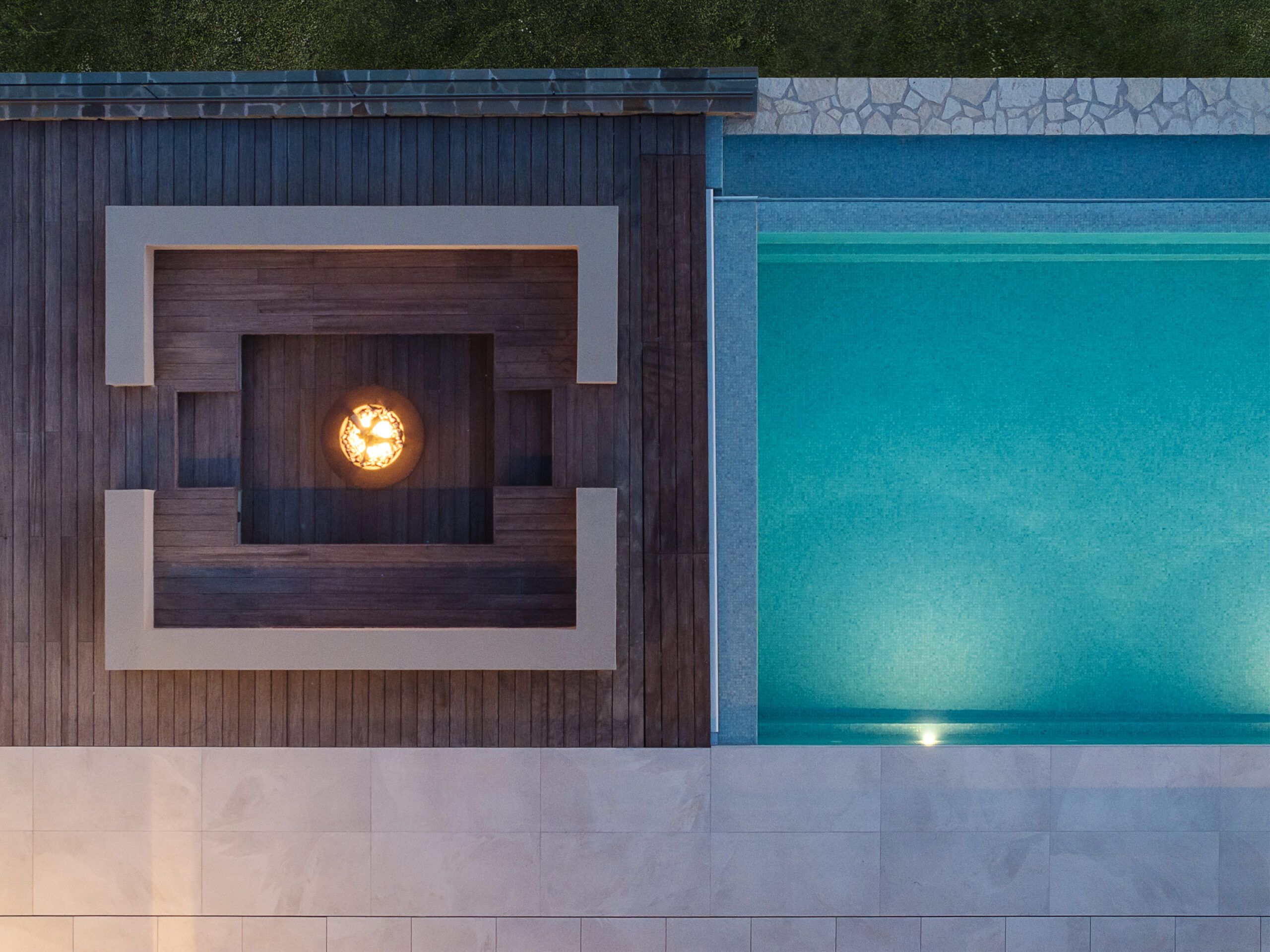
The use of natural materials—local stone, wood, and earth-toned plasters—enhances its integration into the landscape and creates a sense of calm and closeness. The interior spaces continue this language, with materials that “breathe” and surfaces that invite touch. Outdoors, stone-like ceramics and wooden decks complete the connection to the natural setting of Messinia.
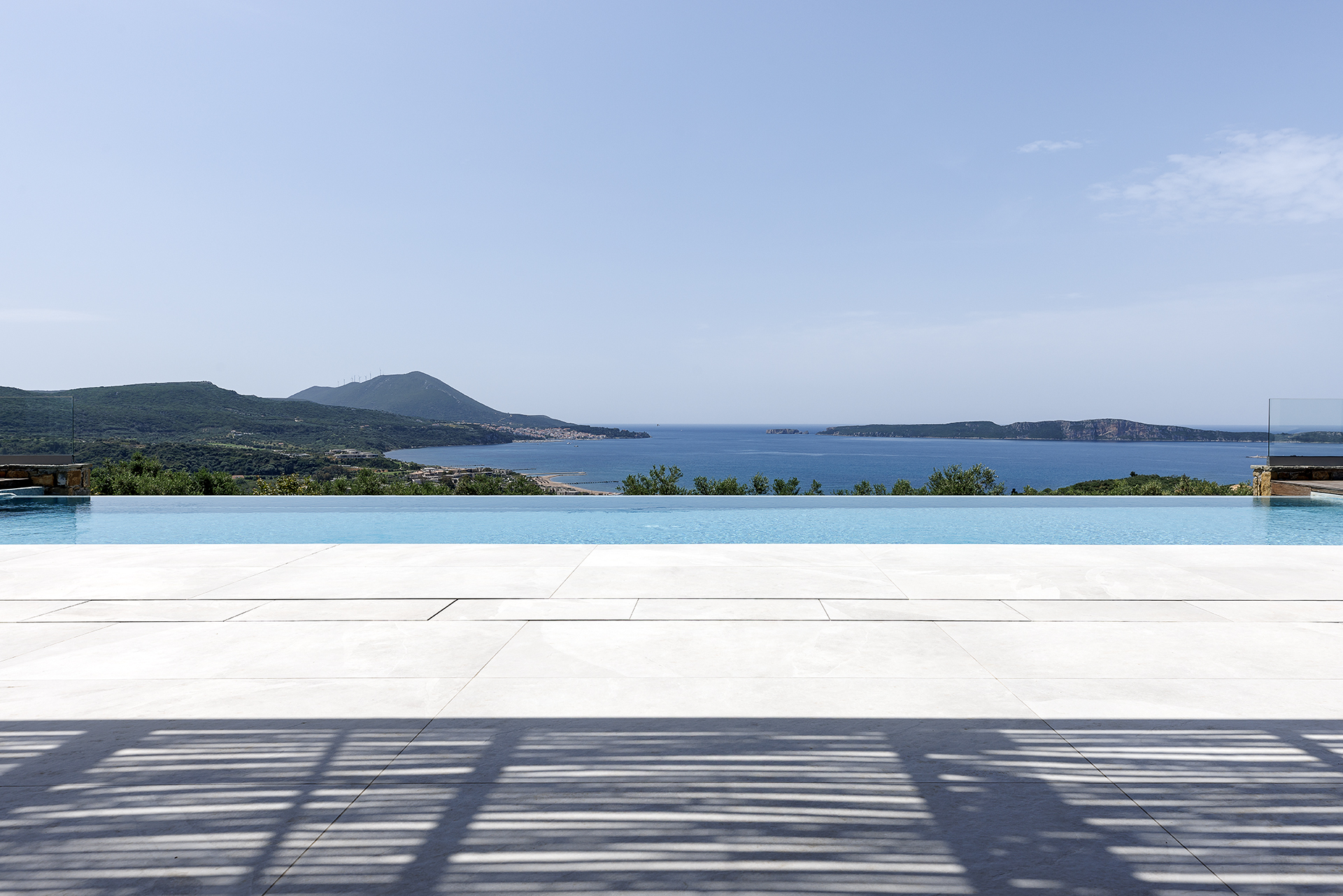
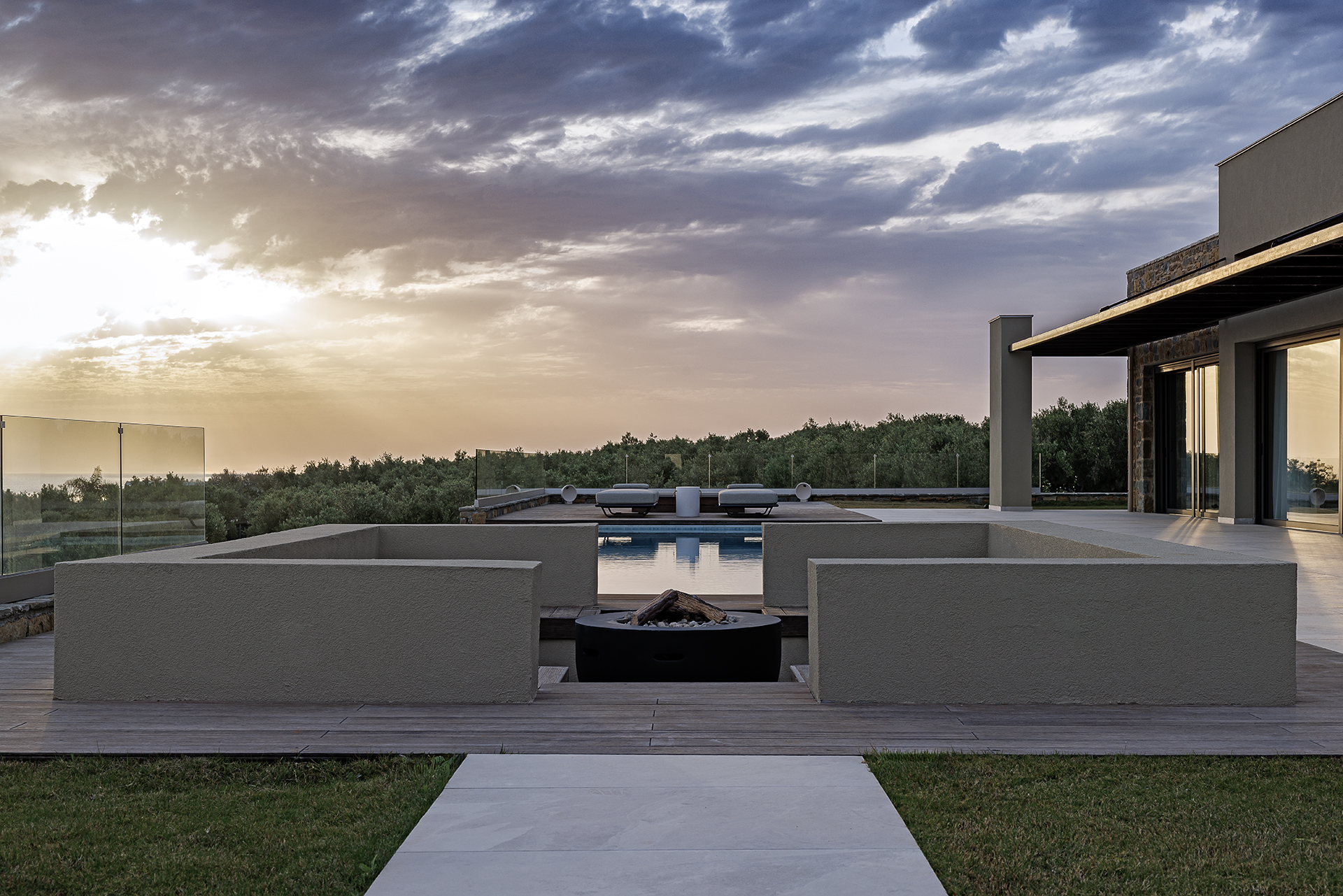
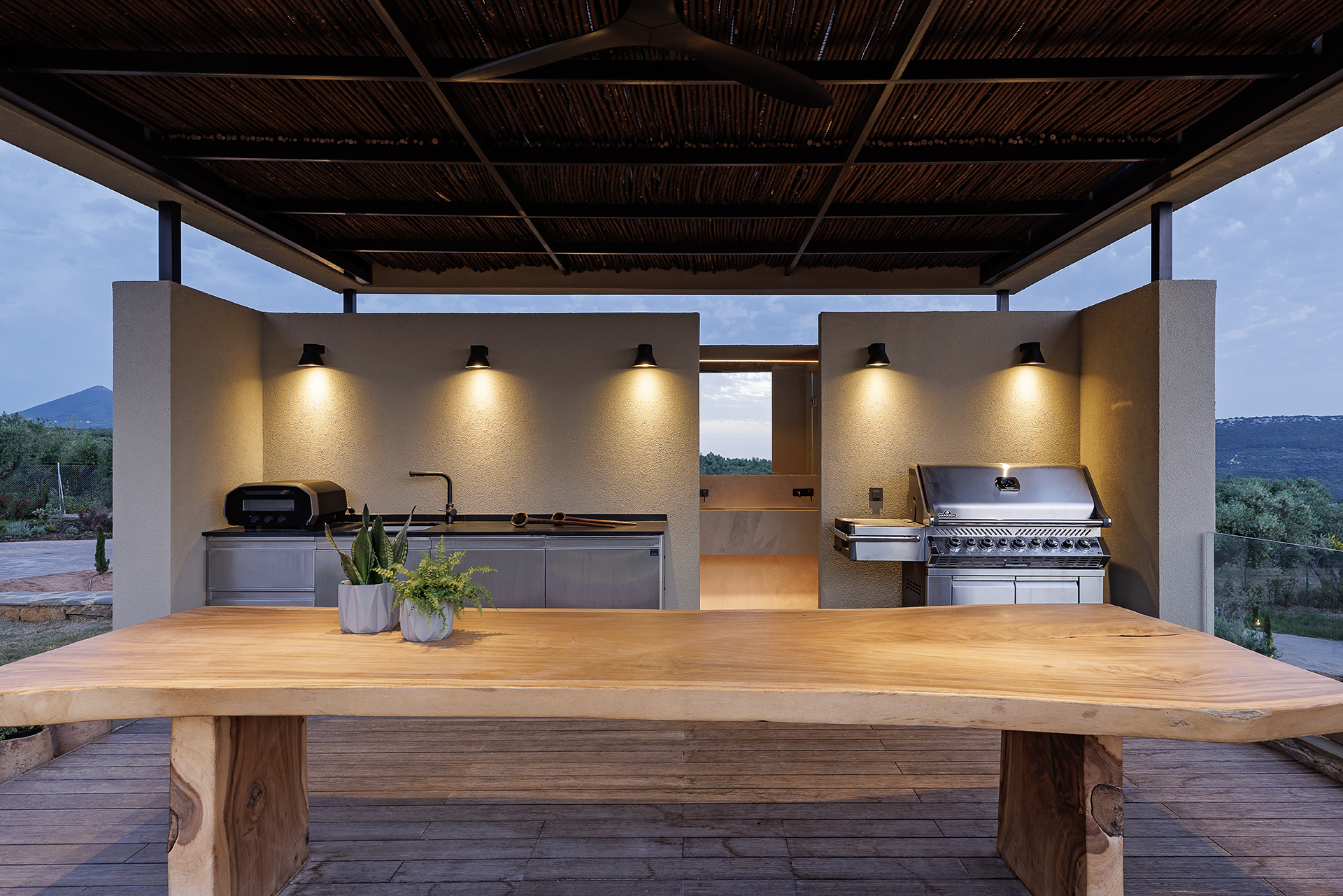
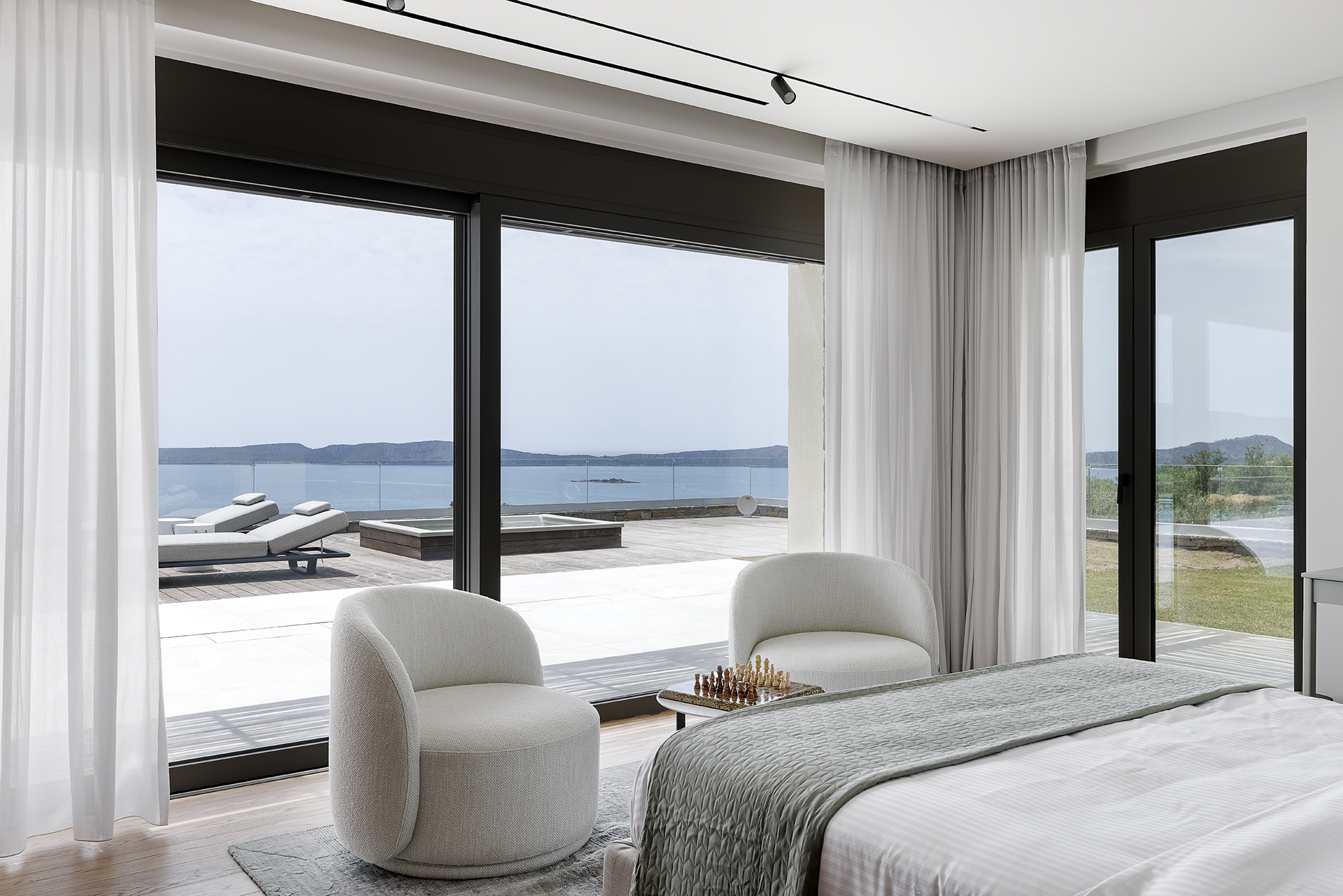
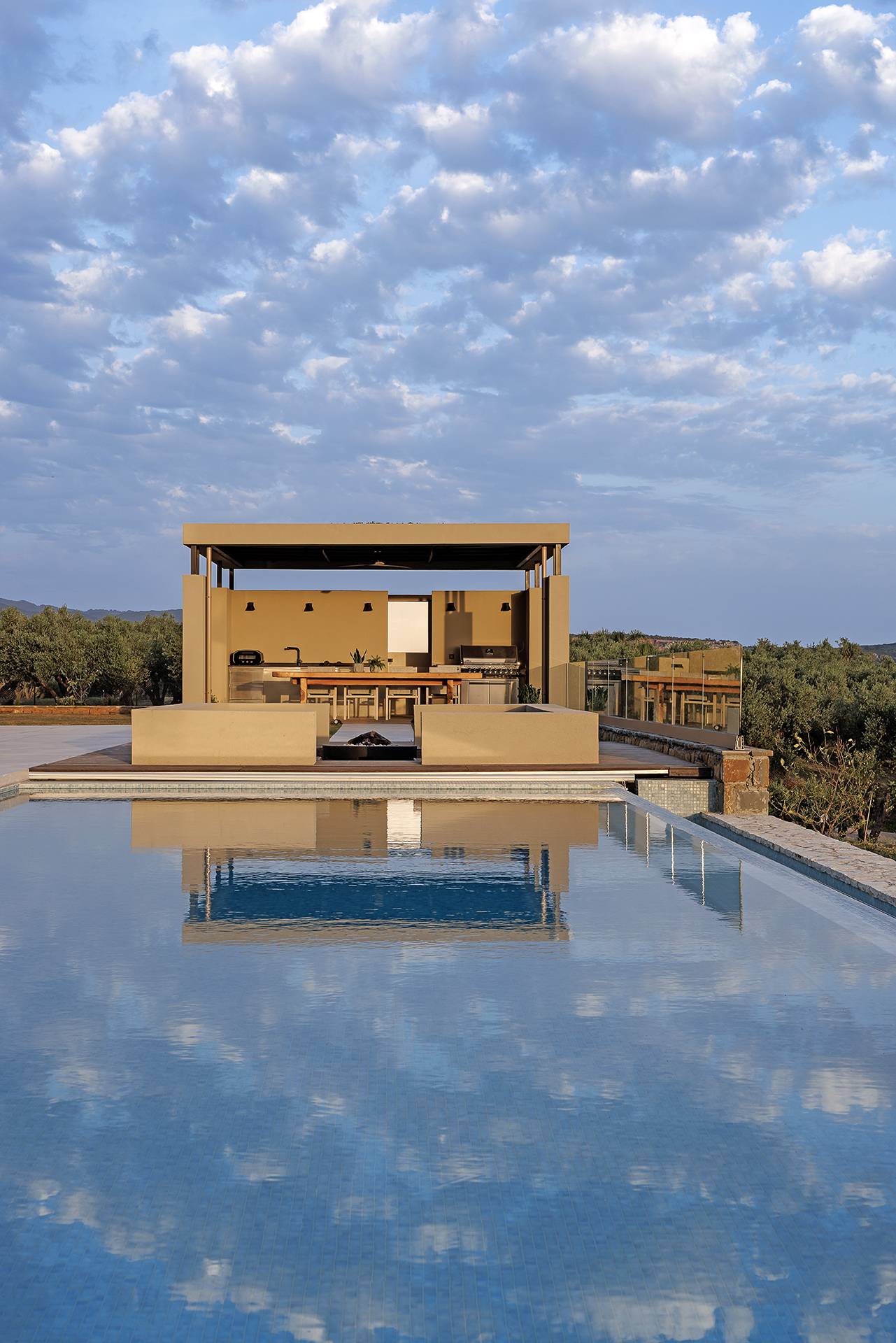
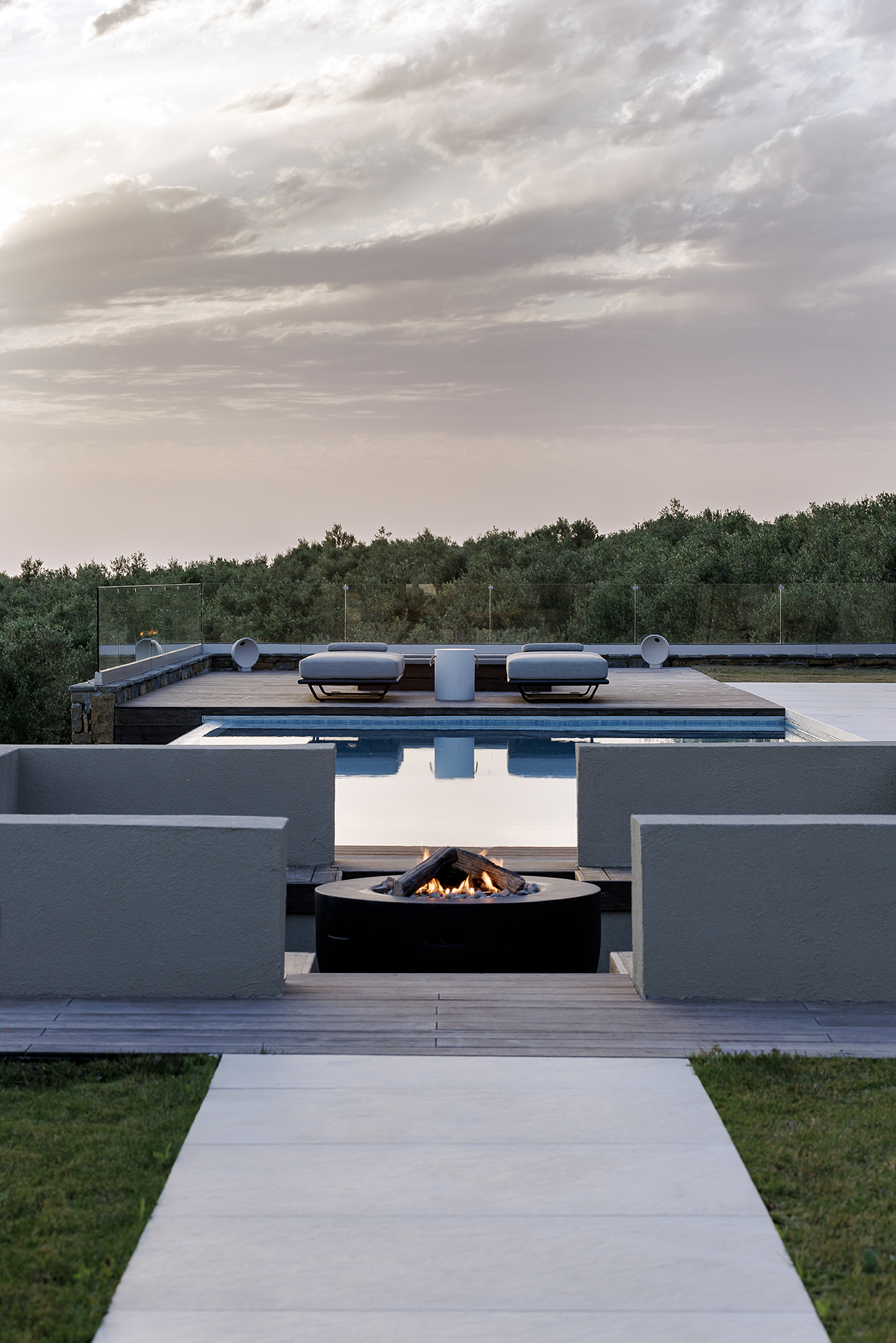
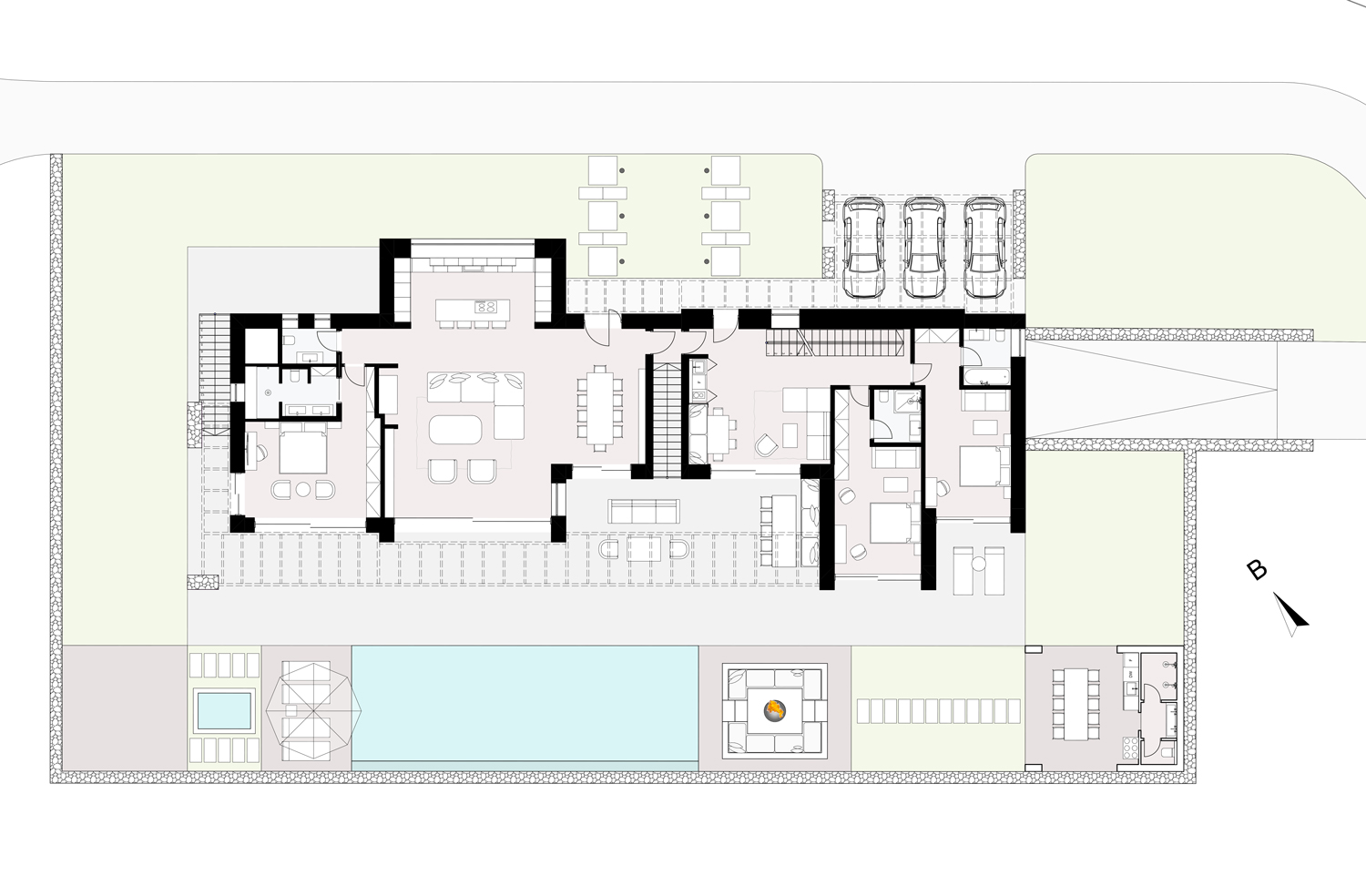
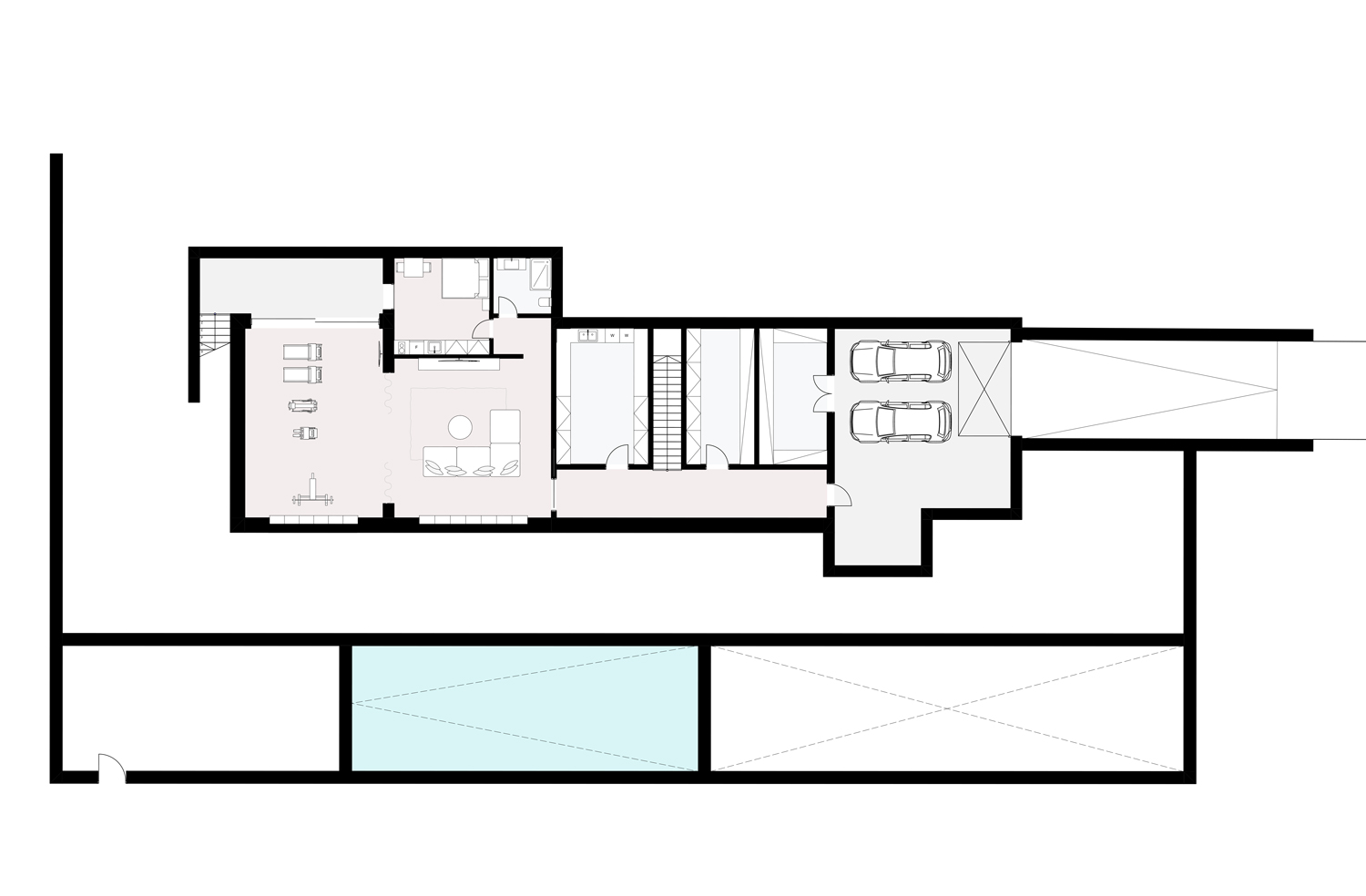
The floor plan is organized into three zones, following the natural slope of the terrain. The first zone hosts the main outdoor areas: an infinity pool, outdoor kitchen, seating areas with a firepit, and relaxation zones framed by views of the Ionian Sea. In the second, semi-outdoor spaces and terraces offer privacy and filtered light. In the third zone, the primary living areas open toward the views, allowing natural light to permeate the interior.
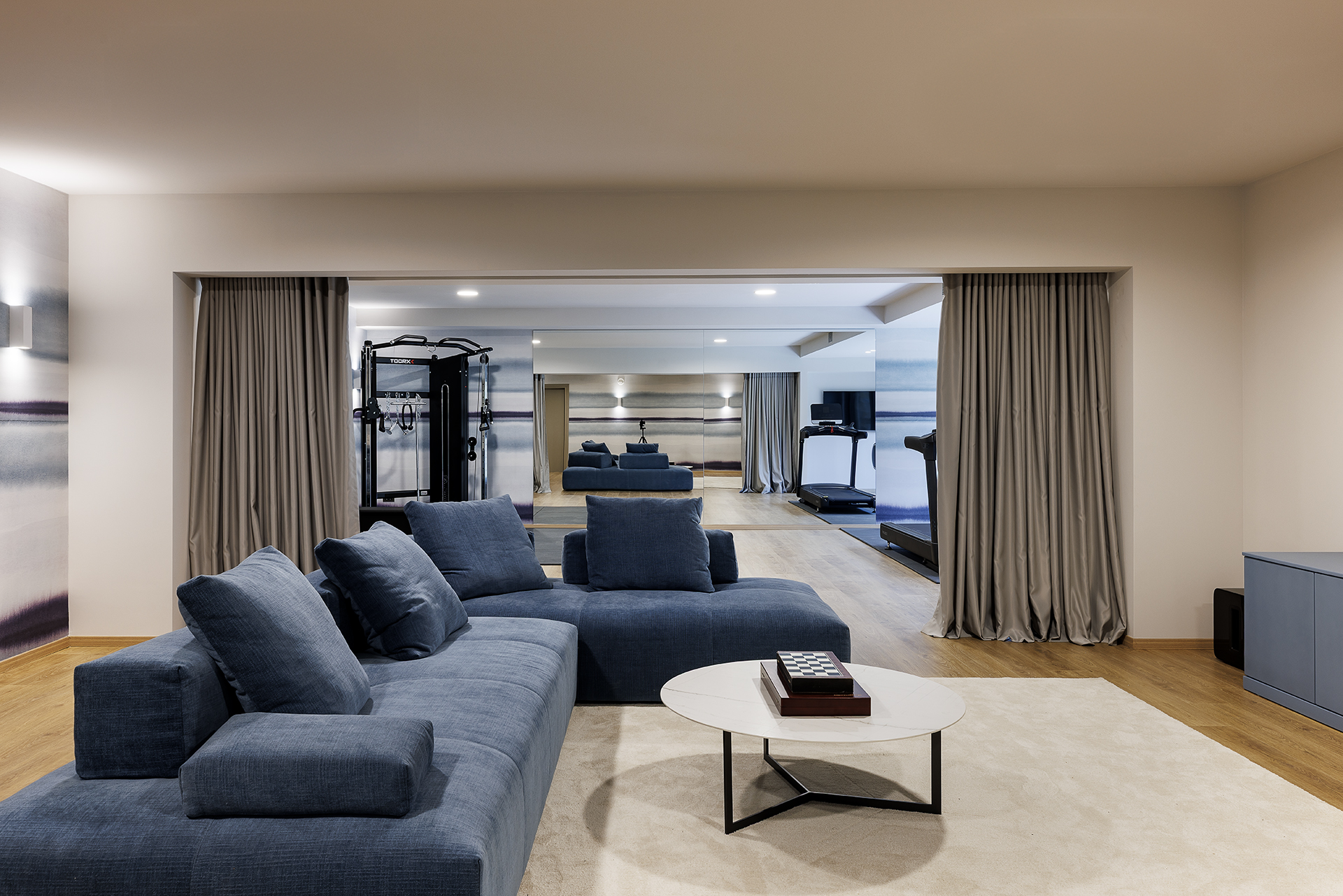
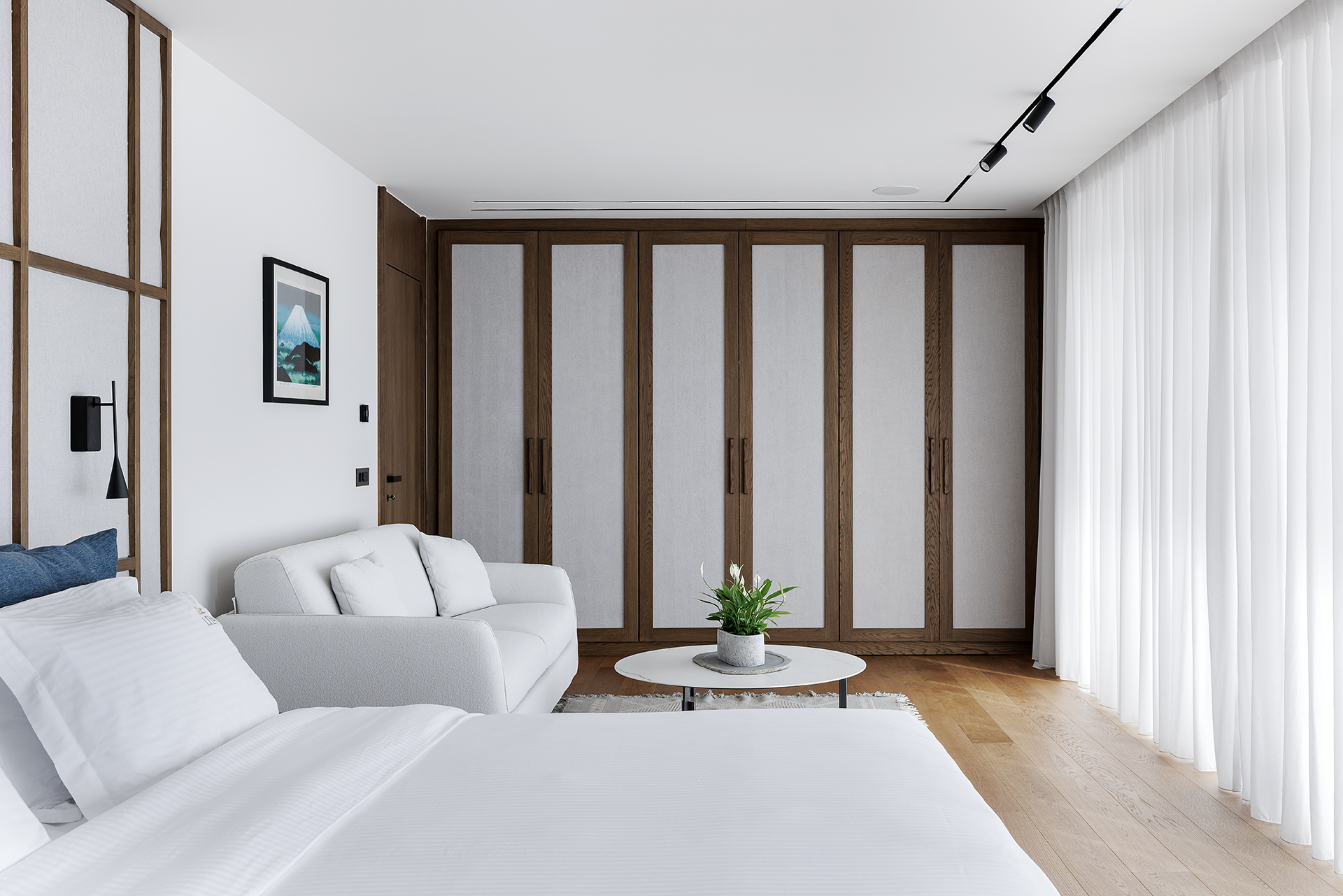
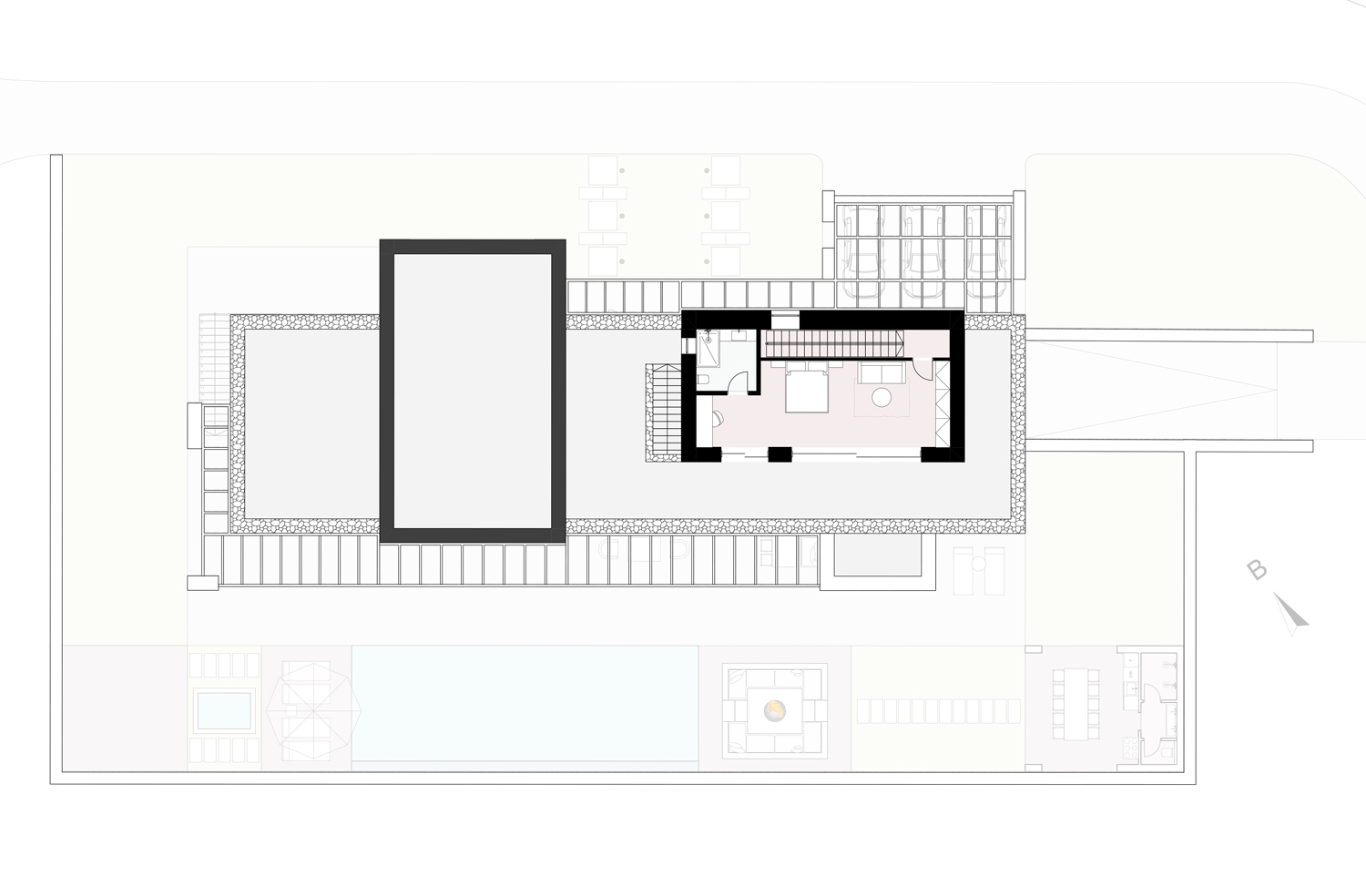
Liya is primarily single-story, with a basement that houses a gym, playroom, and auxiliary spaces, and an upper floor dedicated to the master bedroom—a “lookout” that appears to hover above the landscape.
A distinctive feature is the ability to divide the residence into two independent units via a connecting “neck,” offering flexibility and freedom in its use. Liya does not propose a single way of living; it proposes an open space for relationship.